
ECOCERT and How to Get Certified for the Organic Cashew Nut Industry
A cashew industry guide to ECOCERT-Certified USDA NOP and EU Organic Regulation Compliance for Global Cashew Markets.
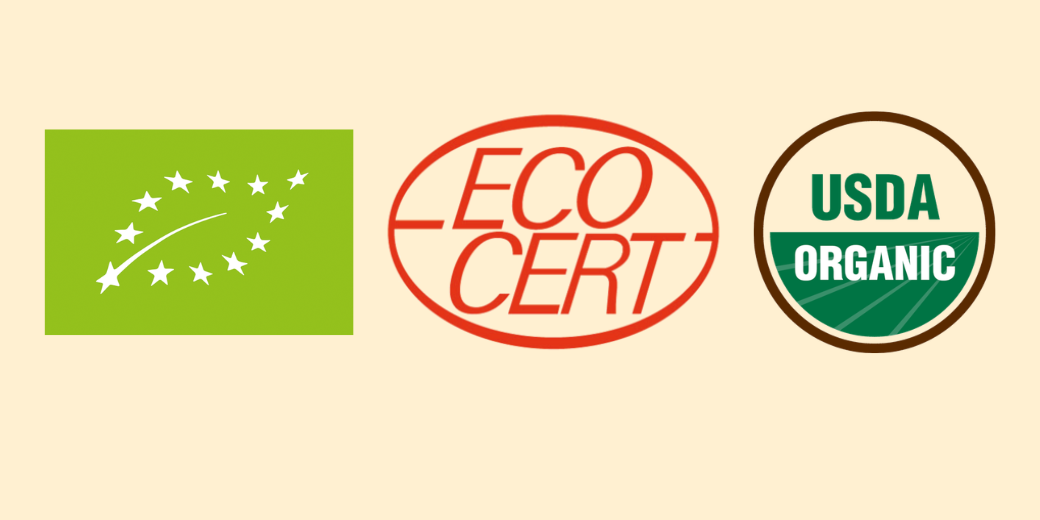
Who Are ECOCERT and What Do They Certify?
ECOCERT has been providing organic farming certification for over 30 years. It’s a globally recognised organisation that certifies against multiple standards for agri-food and numerous other sectors.
The certifications that are most relevant to the cashew nut industry are NOP (National Organic Program) and EOS (ECOCERT Organic Standard). However, it’s worth noting that while the term EOS might still be used by some in the industry, it was replaced by EU Organic Regulation (2018/848) in January 2025.
NOP is essential for access to American markets, while, perhaps unsurprisingly, the EU Organic Regulation provides access to European markets. We’ll explore these standards in more detail shortly.
If your organisation achieves certification via ECOCERT it means that you are recognised for adhering to strict organic standards that cover sustainable farming practices, avoidance of synthetic pesticides and fertilisers, product traceability from farm to market, and rigorous documenting of your operations. It also means you use practices intended to maintain biodiversity, promote soil and water health, respect animal welfare, and support ecosystem balance.
Producers who achieve certification can label products as organic with appropriate labels, which demonstrates brand values, provides access to premium organic markets, and builds consumer trust.
NOP Certification
NOP (National Organic Program) is the federal organic regulation managed by the USDA (United States Department of Agriculture). It dictates strict production, handling, and labelling standards for organic products in the United States. While the USDA operates the NOP program, ECOCERT serves as an accredited certifying agent. This means it’s authorised to certify farms, processors, and handlers according to USDA NOP standards.
EU Organic Regulation (2018/848) (Formerly EOS) Certification
EOS (Ecocert Organic Standard) was the ECOCERT organic certification recognised by the EU, and it’s now the EU Organic Regulation. EOS applied to a diverse group of categories, including unprocessed plant products, live animals, processed agricultural products and seeds, covering the entire organic supply chain from farming to processing, storage, labelling, import/export, and final delivery.
Overall, the EU Regulation 2018/848 covers the entire chain and product types covered by EOS, but with an updated and legally binding framework for the EU market, including some expanded product categories and stricter production rules. Additional products include cork, maté, and vine leaves, and stricter rules include a prohibition on hydroponic production.
Other points to note regarding the transition from the EOS to the EU Organic Regulation:
- All operators must fully comply with EU organic rules, including inputs, production methods and traceability.
- The equivalence principle for most non-EU countries has ended, requiring non-EU producers to meet EU standards precisely.
- New frameworks for group certification of smallholder farmers have been introduced, with defined legal structures and Internal Control Systems.*
- Increased focus on preventing contamination through parallel production, product segregation, cleaning protocols, residue testing, stronger controls, and auditing processes.
- Updates to authorised substances and inputs are ongoing, affecting organic production inputs and practices.
- ECOCERT is working with suppliers to ensure ongoing compliance.
*For context, defined legal structures refer to the requirement that a ‘group of operators’ must have its own official legal identity. This requirement was introduced to improve the oversight and management of group certifications, particularly for small-scale organic producers.
All organic operators must establish Internal Control Systems (ICS). An ICS is a system of control activities and procedures designed to ensure compliance throughout the production chain. It includes monitoring and documenting operations, implementing procedures for traceability, record-keeping, and segregating organic and non-organic products. External control bodies audit the ICS and perform risk-based inspections and sampling.
It’s worth noting that Organic certification may require a conversion period for orchards - this is usually between two and three years.
How Do These Certifications Apply to Cashew Nuts?
For cashew nuts, both certifications enforce strict organic growing, processing, and labelling rules to ensure product integrity. Both standards help address perennial issues in the cashew nut industry by requiring producers to be proactive. Common issues include pesticide drift from neighbouring fields and improperly cleaned shelling equipment.
The EU standards have slightly more stringent limits on substances and require different traceability and documentation processes.
Below, we’ve compared the production and processing standards for NOP vs EU certifications:
Production and Processing Standards: USDA NOP vs EU Organic Certification
| Criteria | USDA NOP | EU Organic Certification |
|---|---|---|
| Organic Ingredient Minimum | Minimum 95% organic content on finished product | Minimum 95% organic content on finished product** |
| Pesticide Use | Prohibits synthetic pesticides but allows some natural and limited synthetic substances from a national list | More restrictive than NOP; only natural substances on the EU positive list permitted |
| GMO Policy | Zero tolerance for GMOs; traceability and record check requirements | Zero tolerance for GMOs; stricter than NOP, as it requires mandatory GMO testing for organic products |
| Fertiliser Use | Allows only approved organic fertilizers | Stronger emphasis on organic inputs with a holistic focus on soil health and ecosystem preservation |
| Processing Inputs | Limited use of certain substances on the national list | Stricter additive and processing aid controls as per EU-wide regulations |
| Traceability | Full chain of custody and record-keeping required | More rigid traceability and supply chain certification controls |
| Contamination Prevention | Prevents contamination from prohibited substances, largely targeting fraud and non-compliance | A stricter, proactive management system that includes preventing accidental contamination and residue through detailed segregation, cleaning, and monitoring procedures |
**While both certifications require that products labeled ‘organic’ contain at least 95% organic ingredients (excluding water and salt), the EU has stricter additive lists and limits the use of some substances that the NOP may permit to make up the final 5%.
This table clarifies the differences in regulation and compliance of NOP vs EU certifications:
Regulation and Compliance: USDA NOP vs EU Organic Certification
| Criteria | USDA NOP | EU Organic Certification |
|---|---|---|
| Regulatory Body | U.S. Department of Agriculture (USDA) | European Commission in coordination with EU Member States |
| Certification Duration | 3-year transition period for land under organic management | Typically 2-3 years, depending on product and region |
| Labeling | '100% Organic,' 'Organic (95%),' and 'Made with Organic (70%)' categories per USDA rules | Single mandatory EU organic logo; 70% label category not allowed*** |
| Import Requirements | Imports must comply with USDA regulations; an accredited certifier is required | Imports must meet EU Regulation (EU) 2018/848; an electronic Certificate of Inspection (e-COI) is required |
| Audit Frequency | Annual audits, with possible unannounced inspections | Annual audits, risk-based, and unannounced inspections occur |
| Documentation | Organic System Plan (OSP) mandatory | Unit Description and full compliance documentation under EU rules |
| Enforcement & Compliance | Strong enforcement via accredited certifiers and the USDA | EU centralised oversight through recognised control bodies |
***The EU Organic Regulation also has an additional ‘In Conversion’ label for products that are in the transitional period of conversion to organic farming (usually 2-3 years). This label allows such products to be identified separately but not sold as fully organic.
Why Multi-Market Organic Certification Matters
Multi-market organic certification is essential for the organic cashew industry (as well as other sectors) as it provides access to major global markets, such as Europe and the US. It opens up the world for export opportunities and markets willing to pay premium prices for quality organic products.
Multi-market certification also aligns with global sustainability initiatives and ESG (environmental, social, and governance) objectives. If you’re a producer, this also positions you competitively in the international marketplace, and the certification requirements themselves help you pursue your own goals, such as reaching Net Zero or ensuring fair pricing for farmers.
Certification Process with ECOCERT
The ECOCERT certification process consists of four major steps:
- Apply for Certification
At this point, the ECOCERT team will advise you on the labels that are best suited to the products you’re offering and review your application. - On-site Audit
After the application stage, auditors will visit your site(s) and check that your systems, practices and products comply with the corresponding standards. - Document Review
After the site visit, ECOCERT certification officers will review the audit report and decide whether certification can be given. - Certification
Your certificate is issued, and you can display the organic logo on your products.
Differences for NOP and EU applications
Application processes are very similar, but there are some slightly different requirements to note:
NOP: Applicants must submit an Organic System Plan (OSP) that is specifically aligned with USDA regulations.
EU: Applicants must provide a Unit Description that matches EU organic rules.
Timelines
ECOCERT Certification Timeline
The ECOCERT certification process typically takes between 4 to 8 months from application to the certificate being issued, depending on the completeness of your documentation, audit scheduling and audit results. However, it can take an organisation up to 9 months or more to prepare for certification, depending on how much work they have already put in to achieve organic status.
Cashew Coast’s Farmer Integration Director, Joel Bagbila - an expert in the certification process - has put together a more detailed breakdown to help you understand how long each part of the process takes:
| Activity | Average duration |
|---|---|
| Application submission & review by ECOCERT | 7-15 days |
| Contract formalisation & commitment | 7-15 days |
| Initial assessment (eligibility) | 3-7 days |
| Document evaluation (form submission) | 3-7 days |
| On-site audit | 7-30 days (depending on the size of the applicant’s operation) |
| Audit report drafting & delivery | 15 days |
| Final review (implementation of corrective actions, evaluation by ECOCERT & certification decision) | 45 days |
| Entire certification process | Approximately 4.5 months |
Investment and Preparation Required
A significant investment into the supply chain and production processes is needed to become a certified organic cashew business. Producers already adhering to strict organic standards before applying should therefore get through the process more quickly.
Certificate Validity and Annual Inspections
Once granted, ECOCERT organic certification is typically valid for at least two years from the audit date, with annual surveillance audits required to maintain compliance and renew the certificate.
The Conversion Period for Cashew Orchards
Cashew producers also need to go through a conversion period before they can label their nuts as organic. A conversion period applies when the land or orchards have previously been used with prohibited substances or conventional farming practices. Since cashew trees are perennial crops, this typically requires 36 months of organic management before the cashews can be certified as organic. During this conversion period, the orchards must be managed according to organic standards, but the nuts cannot yet be sold as certified organic.
Costs
Costs vary depending on factors such as operation size, complexity, geographical location, number of products, and audit days required. Typical fees include an application fee, audit fees based on auditor days, travel expenses if applicable, and annual renewal fees. Smaller operations can expect lower costs, while larger or multi-site operations will incur higher fees.
Full guidelines on the ECOCERT application process can be found here, and additional information about obtaining NOP certification is available here.
Benefits for Producers and Buyers
ECOCERT certification delivers distinct advantages across the cashew supply chain. Here's how different stakeholders benefit:
Cashew Producers and Cooperatives
- Access to premium export markets and higher selling prices
- Safer production environments with no exposure to harmful chemicals
- Community development and improved livelihoods
- Strengthened reputation for responsible farming
- Long-term soil health and ecosystem benefits
Bulk Cashew Buyers (Retailers, Wholesalers, Food Manufacturers)
- Guaranteed organic integrity with independent third-party verification
- Products that meet major market standards for US, EU, and global trade
- Enhanced brand positioning and consumer trust through certified organic claims
- Complete traceability and transparency in the supply chain
- Strengthened due diligence and meets sustainability objectives
- Supports responsible procurement decisions
- Simplified responsible sourcing decisions aligned with corporate environmental and social commitments
Industry Bodies and Certification Auditors
- Ensures consistent application of international organic standards
- Supports regulatory compliance and promotes industry best practices
- Builds trust and credibility across the cashew supply chain
- Aids in risk mitigation and detection of non-compliance or malpractice
Cashew Coast’s Commitment to Organic Integrity
At Cashew Coast, we proudly comply with the highest EU and US food safety and ethical standards. Our certifications include ECOCERT NOP, ECOCERT EOS (now EU Organic Regulation), Fair Trade and BRCGS Food Safety. We were also winners at the Fairtrade Global Awards 2023.
Organic certification is a central element of who we are, but we recognise it as an important baseline rather than the complete picture. While certifications like ECOCERT provide independent third-party verification and positively impact supply chains, they represent snapshots in time and don't address all environmental and human rights issues covered by Human Rights and Environmental Due Diligence (HREDD) requirements.
That's why Cashew Coast goes beyond certification alone. We implement complementary measures including robust HREDD processes, ongoing supplier engagement, and continuous improvement initiatives. We also acknowledge the practical challenges: the new EU Organic Regulation has increased administrative complexity, double certification (EU and USDA) requires significant resources and effort, and the investment needed for certification could support other sustainability priorities. These realities drive our commitment to both maintaining rigorous standards, and advocating for greater harmonisation across certification systems.
Ultimately, Cashew Coast is dedicated to empowering West African farmers, protecting the environment, and supplying high-quality, organic cashews to global markets through certification and the comprehensive due diligence measures that support genuine, long-term impact.
“Staying true to organic principles is demanding — but it’s also transformative. It pushes us to innovate, to listen to nature and communities, and to build a food system that nourishes both people and the planet.”
— Salma Seetaroo, CEO, Cashew Coast
FAQs
What do NOP and EU Organic Regulation certifications mean for cashew nuts?
The USDA National Organic Program (NOP) certification and the EU Organic Regulation (EU) 2018/848 certification represent two internationally recognised organic standards. NOP certification is required for the US market and allows use of the USDA Organic label. The EU Organic Regulation certification, which replaced the previous EOS standard in 2025, is required for the EU and other markets recognising EU law. Both certifications guarantee that cashew nuts are produced, processed, and handled according to strict organic guidelines - free from synthetic chemicals and GMOs - with complete traceability and third-party verification. While ECOCERT audits cashew nut producers and processors for compliance with these standards, the certifications themselves are issued under the relevant regulatory bodies.
Why are NOP and EU Organic Regulation certifications important for buyers and producers?
Certification ensures market access to the two largest organic markets globally (US and EU). They provide documented proof of organic integrity, support compliance with regulatory and labelling requirements, boost product marketability, enable premium pricing, and build consumer confidence through transparent and trusted supply chains.
How does the ECOCERT audit process work for organic cashew farms and processors?
ECOCERT performs detailed initial and annual on-site inspections combined with comprehensive documentation reviews for producers and processors. The audits verify compliance with prohibitions on synthetic chemicals, validate input records, assess environmental stewardship efforts, confirm traceability systems, and check regulatory adherence specific to the product destination.
What’s the difference between ECOCERT NOP and EU Organic Regulation certification?
NOP certification verifies compliance with USDA regulations, authorising use of the USDA Organic label for the US market. Certification against the EU Organic Regulation is required for certification in the EU and other regions that recognise this standard - ECOCERT audits for compliance but the certification itself is granted under EU regulatory oversight. The EOS standard has been replaced by this EU regulation since January 2025.
What are the main requirements for certification?
Both certifications demand no use of synthetic pesticides or fertilisers, full traceability throughout the supply chain, rigorous documentation, commitment to environmental care, and conformity with respective organic market standards.
How can I verify that Cashew Coast is certified?
Certification status can be checked on our certifications page, or by requesting proof of current ECOCERT certificates directly from our sales or compliance teams.
How can I start sourcing certified organic cashew nuts for the US or EU markets?
Contact Cashew Coast’s sales team using our enquiry form, phone number or email address on our contact-us page, and let us know whether NOP- or EU-certified products are required.
Next Steps: Partner with Cashew Coast
If you are interested in partnering with an ECOCERT-certified cashew producer, we’d love to hear from you. To learn more about our organic cashews and discuss partnership opportunities, get in touch today.