Skip to content
Layer_1

International Guide

The Cashew Coast Industry

Blog2.2

Over 5 million tonnes

Per Year

$5.2Billion

Revenue

About us

About the Industry Guide

The Cashew Industry Guide is an impartial, evidence-led reference resource for professionals, researchers, policymakers, and practitioners engaged with the global cashew sector.

This guide doesn’t represent the commercial interests of any single operator. Content is structured around peer-reviewed research, international standards bodies, and recognised data providers.

Where pilot programme data and operational case studies are cited, contributors are identified by role and region – not by brand prominence.

Zigzag - Orange

The cashew industry guide core thematic areas:

Each section is supported by named institutions, primary datasets, and research links provided at the point of claim. This resource is designed for supply chain and procurement professionals, researchers and academics, journalists, policymakers and regulators, NGOs, ESG consultants, and industry analysts.
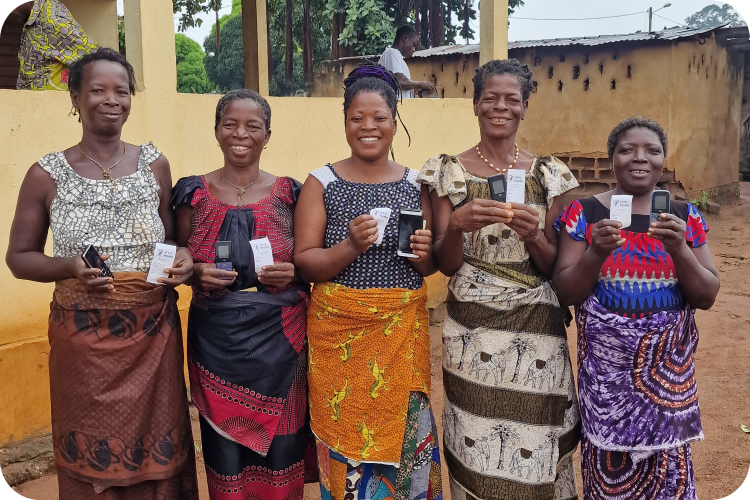
1. ABOUT US women holding phones

Supply Chain Transparency

A cashew kernel may pass through four or five countries between harvest and retail. At each stage, buyers, regulators, and certification bodies may need to verify its origin, handling, and the standards applied.


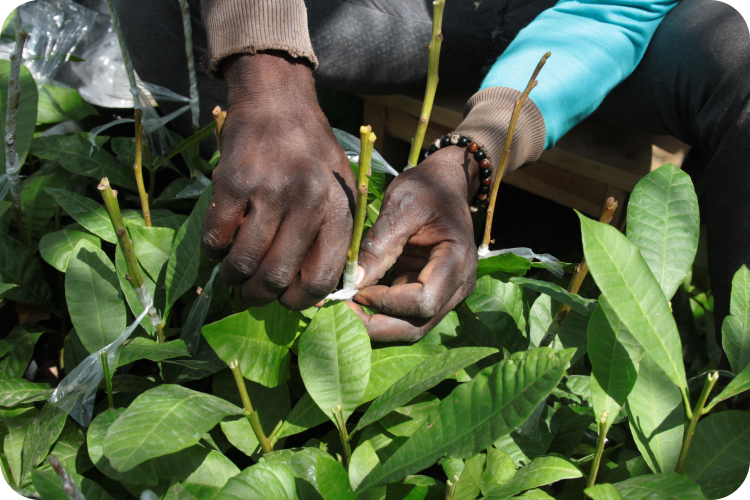
2. ABOUT US putting saran wrap around branches-1

Sustainability and Regeneration


Cashew is a perennial crop grown predominantly in tropical regions with fragile soils and high biodiversity value. How it's farmed has significant consequences — for soil health, carbon storage, water systems, and the ecosystems in which it's produced.

3. ABOUT US Woman holding phone

Industry Innovation and Data Science


This module covers the technology layer: the digital tools used to capture, store, transfer, and verify that information in practice. Four categories of technology are relevant to cashew traceability, and it’s worth clarifying what each does before assessing where it fits.

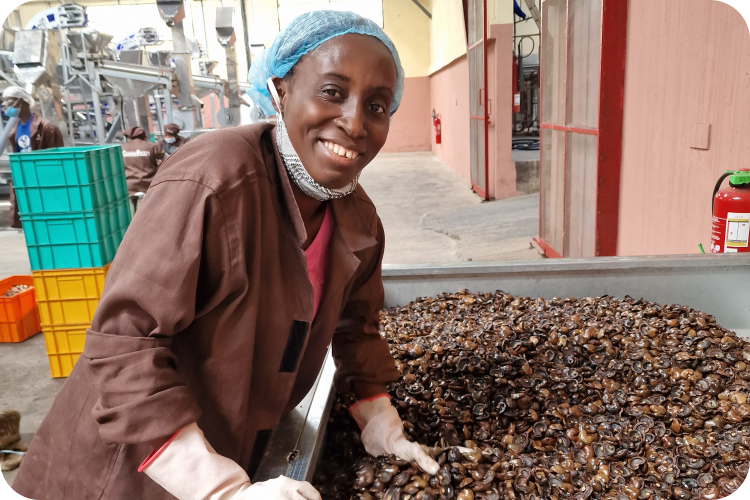
4. ABOUT US woman with shells

Socio-economic and ESG Performance

The cashew sector's social and economic performance — how fairly it distributes value, how effectively it reduces poverty, and how resilient the communities it supports are — is increasingly subject to rigorous measurement and reporting.


5. ABOUT US farmer women

Women's Empowerment & Partner-driven Innovation


Women make up a significant share of the workforce across cashew agriculture — as farmers, harvesters, processors and traders. Yet they consistently face greater constraints than men in accessing land, finance, training and market information.

cashew_organic_honey_750x500-1

Partner Innovations: Organic Honey, CNSL, Biochar

Cashew processing creates value beyond the kernels by transforming shells and orchard byproducts into CNSL, honey, and biochar, fostering sustainability and new revenue streams through the circular economy.

ABOUT US-cashew-farmers-women-mobile-money


Nurturing Farmers for Success

Boosting smallholder farmers' productivity through integrated value chains, innovative intercropping, and digital payments, ensuring living wages and prosperity.

ABOUT US-putting saran wrap around cashew tree branches-1


Farming Fortitude: Empowering Our Growers

We equip our cashew farmers with resilient cashew plants that can withstand climate change, securing their livelihoods and ensuring a continuous supply of our beloved cashews.

ABOUT US-Cashew-Farmer-Woman holding phone


The Transparency Trail: Tracking Every Step

We lead cashew processing, offering unparalleled transparency and 100% traceability to farmers through advanced digital solutions, showcasing our industry expertise.

ABOUT US-woman-cashew-worker-with-cashew-nut-shells


Full Circle Cashews: Embracing Sustainability

As proponents of a circular economy, we recycle all cashew by-products into valuable resources, with the help of our different partners.

ABOUT US-Cashew-farmer women


Women at the Helm: Powering Progress

We empower women by providing them with permanent contracts, not daily subcontracting, and proudly have 43% of our senior leadership roles filled by women, enabling them to significantly contribute to their families.

ABOUT US-cashew-coast-snacks-packs


Unveiling Our Local Gem: A Healthy Journey

Promoting the consumption of locally grown, protein-rich cashews, we aim to lessen dependency on imported goods while enriching local diets with cashews' health benefits.

Factory #2

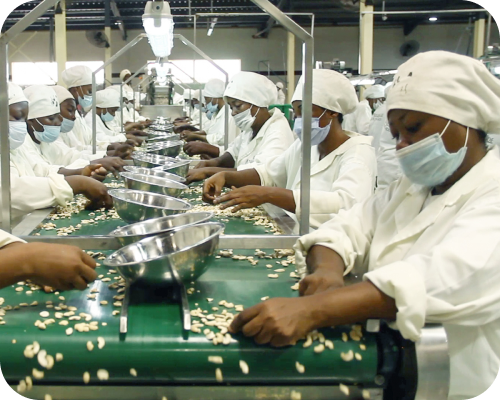
Azaguié: Centralized Manual Peeling for Efficiency and Growth

Azaguié boasts the country's sole A+ BRC certified cashew processing site, setting high standards for quality and safety. Our productive workforce achieves 13 kilograms per woman per day, one of the country's highest productivity yields.

2. ABOUT US Azaguié factory-1

Our Team

The Amazing Team Behind Cashew Coast

Our success stems from nurturing local talent, promoting gender diversity, and striving for excellence in a challenging environment. We're like a family, working to industrialize Africa and make a meaningful impact on the continent.

Salma Seetaroo
CEO
Abou Gbane
Deputy CFO
Jessika Ndri
Legal & HR Manager
Jay Hosanee
CFO

Supply Chain Transparency & Traceability

This page focuses on international food safety standards, traceability protocols, industry certifications, and the integration of digital tracking systems within global agricultural supply chains. Evidence includes peer-reviewed studies on the efficacy of blockchain and regulatory compliance frameworks for nuts and seeds.

Research examples:

Sustainability & Regeneration

This section evaluates regenerative agriculture frameworks, carbon sequestration potential in nut orchards, and methods for measuring biodiversity and water conservation in tropical perennial systems. Evidence includes longitudinal studies on soil health restoration and environmental impact assessments from international agricultural organisations.

Research examples:

Industry Innovation & Data Science

This section explores the integration of artificial intelligence, machine learning, and big data analytics to optimise crop management and supply chain efficiency. Evidence includes peer-reviewed studies on precision agriculture, remote sensing technologies, and interdisciplinary frameworks for digital transformation in emerging economies.

Research examples:

Socio-Economic & ESG Performance

This section focuses on methodologies for assessing socio-economic impact, including living-wage benchmarks, poverty alleviation through cash crops, and the evaluation of rural community resilience. Evidence includes multi-sectoral studies from international development organisations and academic research on agricultural value chains.

Research examples:

Women's Empowerment & Partner Innovation

This page focuses on the socio-economic indicators of female participation in agricultural value chains and the integration of transversal ESG frameworks within the cashew sector. Evidence includes longitudinal studies on gender-inclusive economic growth and reports from multilateral organisations on sustainable development goals.

Research examples:

Partner Innovations: Organic Honey, CNSL, Biochar

This section examines cross-sectoral innovation within cashew growing systems, where co-products and by-products are increasingly recognised as sources of additional value and environmental benefit. It covers organic honey produced through pollination partnerships in cashew orchards, the extraction and application of cashew nut shell liquid (CNSL), and the use of biochar derived from cashew shell and husk residue. Evidence includes research on agroforestry pollination systems, industrial applications for CNSL as a renewable chemical feedstock, and biochar's role in soil health and carbon sequestration.

Research examples:


How to Use This Resource

This guide is designed for multiple modes of engagement - from rapid compliance reference to in-depth academic research.

  • Navigation: The guide is organised into six thematic sections, each with a dedicated landing page. Short introductions and research links on this homepage allow orientation before entering a full theme.

  • Source citation: Every factual claim is traceable to a named institution or primary dataset, linked at the point of claim. Primary documents - peer-reviewed papers, agency reports, official standards publications - are preferred over secondary aggregators.

  • Data usage: Research digests and benchmark data may be downloaded and cited for academic, professional, and journalistic purposes. Where data originates from operational pilot programmes - including those involving Cashew Coast - the contributing party is identified by functional role and region only.

  • Contributions: Researchers and practitioners are invited to submit case studies, propose updates, or flag errors through the contribution channel below.

Evidence & Methodology

  • Source Vetting Standards: All primary sources originate from named institutions with a demonstrable research mandate, regulatory authority, or recognised status as a standards body. Commercial white papers and unverified claims are excluded unless independently corroborated. Where findings are contested, or research is in development, this is noted at the point of citation.

  • Data Attribution Policy: Where operational or pilot programme data is included, the contributing party is identified by functional role and geographic region. Cashew Coast is cited only as a data contributor and case study participant.

  • Editorial Independence: This guide is funded and published by Cashew Coast. No external organisation has editorial influence, review rights, or paid placement within the content. All material is based solely on peer-reviewed and specialist sources.

  • Amendment Policy: Verified errors are corrected promptly. All amendments are noted with the date of correction and the basis for the change.

  • Submissions & Collaborations: If you would like to contribute to or collaborate on this guide, we want to hear from you. Academics & researchers, institutions, NGOs, ESG consultants, policymakers and regulators, journalists, and industry analysts, get in touch!