
Cashew Supply Chain Transparency: Global Traceability Protocols and Food Safety Standards
A cashew kernel may pass through four or five countries between harvest and retail. At each stage, buyers, regulators and certification bodies may need to verify its origin, handling, and the standards applied. Traceability is the system that enables this verification. In the cashew sector, it depends on recognised standards, agreed information-sharing rules, and digital tools that can reliably carry data along the chain.
This page provides a map of the main frameworks that underpin transparent cashew supply chains and links out to detailed modules on standards, technical protocols, digital systems and blockchain, resilience case studies, procurement ethics, and verification metrics.
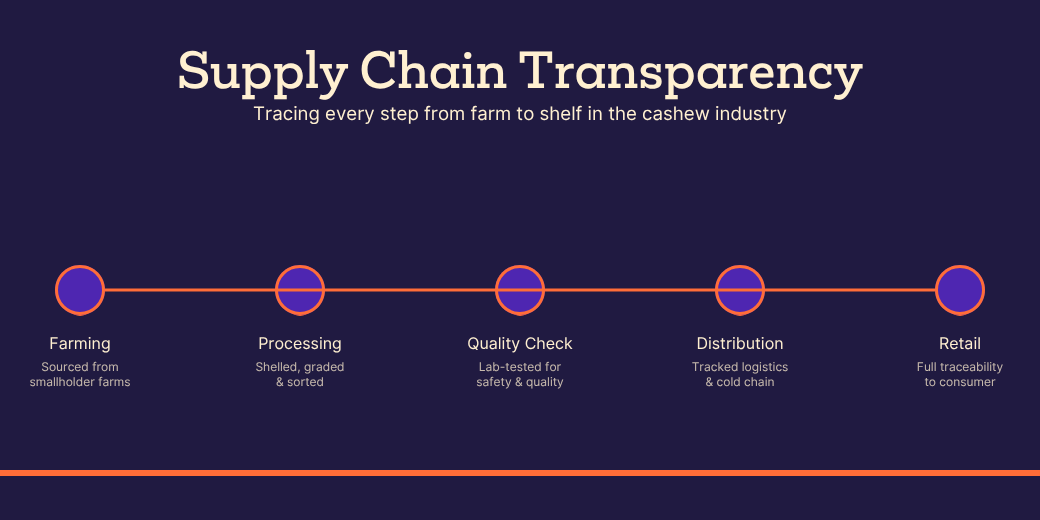
Cashew Supply Chain Traceability: Standards, Digital Tools, and Risk at a Glance
- Compliance baseline: Global standards such as BRCGS and ISO 22005 define the food safety and traceability requirements for cashew supply chains.
- Data-sharing protocols: UNCTAD, CBI and the Sustainable Nut Initiative set out how traceability data moves between producers, processors, exporters and importers.
- Digital integrity: Blockchain, QR codes and RFID tagging are being adopted across the sector to strengthen data integrity and reduce fraud.
- Socio-economic link: Traceability frameworks increasingly tie origin verification to Fairtrade and GFSI commitments on pricing, labour and community investment.
- Risk management: Evidence-based traceability reduces recall exposure and builds buyer confidence, making it a risk tool as much as a compliance requirement.
Jump to: Global Food Safety Standards · Technical Protocols · Digital Systems · Socio-Economic Alignment & QA · Risk Management · Interconnected Themes · Next Steps
Overview of Global Food Safety and Traceability Standards
Global food safety and traceability frameworks set out the expectations that many cashew operators must meet to serve regulated markets.
Standards such as BRCGS Food Safety focus on food safety and quality management systems in processing and packing facilities, while ISO 22005 sets general principles for designing and documenting traceability systems in feed and food chains.
Understanding how these frameworks interact is important for buyers and suppliers who need to align cashew supply chains with international norms and customer requirements.
The module on global standards and certification networks examines their specific clauses, scope and practical implications in greater depth.
Technical Protocols for Multi-Stakeholder Transparency
Where standards describe expected outcomes, technical protocols describe how information about cashew lots is recorded, transferred and checked as it moves between parties.
UNCTAD's traceability framework for agricultural supply chains sets out the conditions for credible multi-stakeholder transparency, including:
- Consistent identifiers for cashew lots across the chain
- Minimum required data fields at each handover point
- Clear responsibilities for maintaining the audit trail
The CBI Cashew Traceability Guide offers sector-specific guidance for exporters targeting European markets, with reference to Sustainable Nut Initiative protocols for origin verification and responsible sourcing.
The module on traceability protocols and digital systems explains how information about cashew lots is recorded, transferred and checked as it moves between parties.
Digital Systems and Emerging Technologies
As cashew supply chains have become more complex, many organisations have begun replacing or supplementing paper records with digital systems. These tools aim to improve data availability and integrity, enabling the retrieval of origin and handling information quickly when needed.
Technologies currently in use or under evaluation include:
- QR codes, RFID tags and blockchain-based platforms
- These enable more secure, structured data exchange, but their adoption depends on factors such as connectivity, technical capacity and cost in producing regions
The module on data management and blockchain examines system design choices, integration issues, and specific use cases in more detail.
Socio-Economic Alignment and Quality Assurance
Traceability systems are increasingly expected to do more than show where a product came from — they're also used to evidence aspects of its production.
GFSI-benchmarked programmes help position cashew operations within broader assurance ecosystems.
Meanwhile, Fairtrade Standards for nuts link traceability to requirements on pricing structures, producer support, and community investments. In practice, this can mean connecting physical lots to information about producer organisations, premium allocations, or improvement programmes.
The module on procurement ethics and buyer confidence models explains how traceability connects to socio-economic and quality objectives, and how buyers translate those expectations into sourcing policies and supplier management.
Risk Management and Industry Resilience
Reliable traceability information supports decision-making when cashew supply chains are disrupted.
Data on supplier locations, product movements and control points can help organisations respond more effectively to issues such as contamination incidents, logistical bottlenecks or sudden regulatory changes.
- For procurement teams, this can reduce the risk of recall-related losses or non-compliance
- For producers and exporters it can support continuity of market access
The module covering case studies of resilience during global disruptions explains how traceability data can support the response to contamination incidents, logistical bottlenecks and regulatory change.
Interconnected Themes in the Cashew Sector
The same systems that record food safety and traceability data often contain information relevant to sustainability and ESG reporting.
As a result, transparency initiatives in the cashew sector increasingly sit at the intersection of regulatory compliance, responsible sourcing and impact measurement.
Section 2: Sustainability and Regenerative Practices examines how environmental and social commitments can be evidenced through the traceability infrastructure introduced in this part of the guide.
Next Steps and Contact
To examine the themes introduced here in more depth, move through Sections 1.1–1.6 in sequence, beginning with Global Standards and Certification Frameworks.
Other parts of the Cashew Industry Guide cover topics such as Sustainability and Regenerative Practices (Section 2), and build on the same traceability foundations to address environmental and socio-economic topics.
For enquiries about contributing traceability or food safety standards data or case studies, or to request expert comment, please get in touch.
Evidence and methodology: You can learn about our source vetting standards, data attribution policy, editorial independence and amendment policy here.