
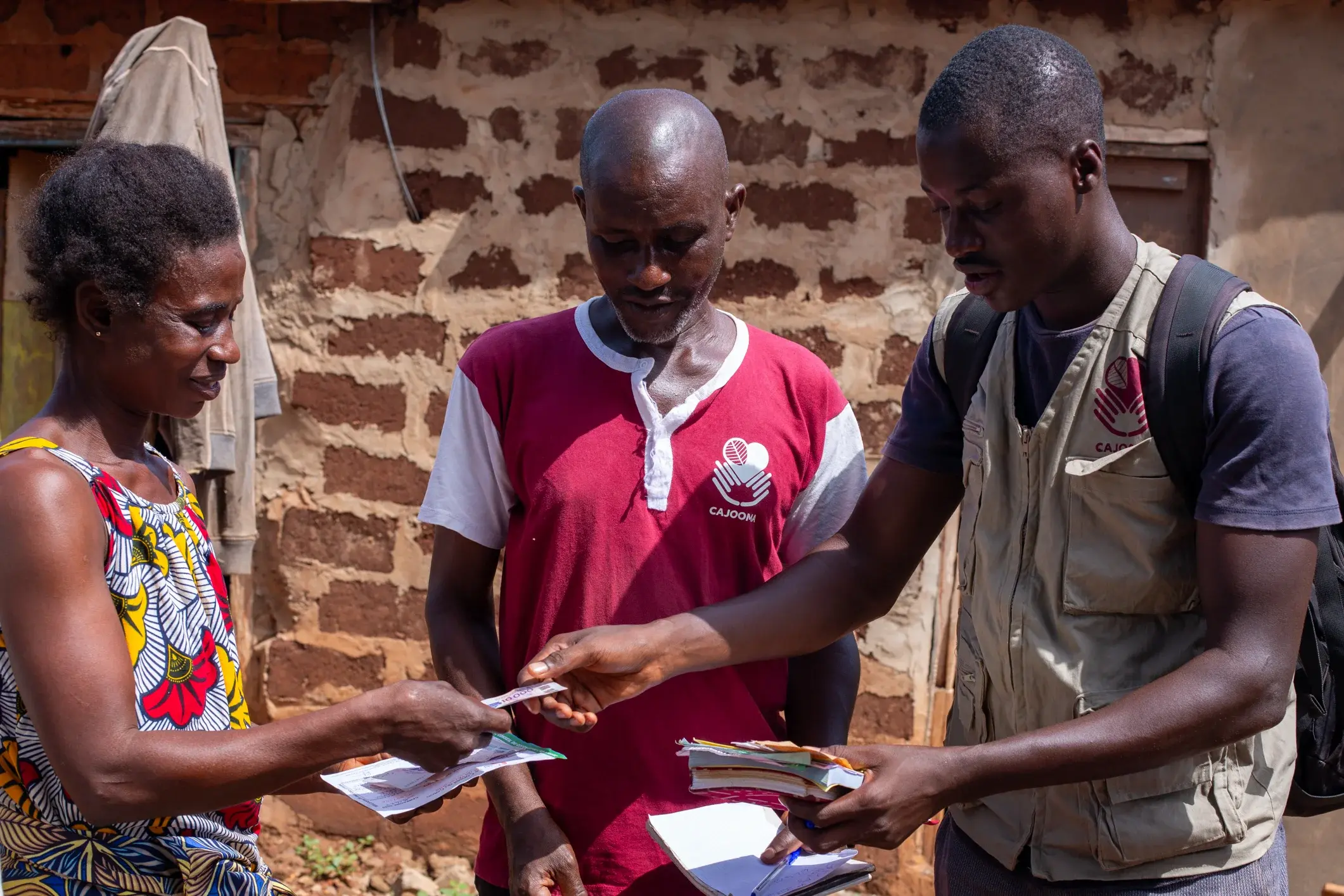
According to UN trade and development, Africa produced around 90% of the world’s raw cashew nuts in 2021, yet processed less than 15% of those grown on the continent. On top of this, Vietnam imports substantial volumes of cashews from Africa for processing before exporting finished kernels to Europe and America. These facts clearly show that the current supply chain model is fragmented. This creates inefficiencies and exposes stakeholders to heightened risks.
Research consistently shows (Chu and Pham, 2024) that deeper collaboration across agri-food supply chains improves reliability, quality, transparency, and the creation of shared values. For the cashew sector specifically, where supply chains traverse multiple continents and involve farmers, processors, traders, and retailers across different regulatory environments, the case for stronger collaboration has never been more compelling.
This article explores why collaboration matters, identifies common gaps, and outlines practical steps buyers and suppliers can take to build more resilient, transparent partnerships.
Why Collaboration Matters in Cashew Supply Chains
The cashew supply chain faces distinctive structural challenges that make collaboration essential. At the production level, the industry relies heavily on West African smallholder farmers who often operate individually on plots averaging just two hectares, lack market information and have limited bargaining power.
Research examining vertical coordination in agri-food systems confirms that this fragmentation creates transaction costs, information asymmetries – where one party has more knowledge than another – and power imbalances that ultimately harm chain efficiency.
Studies of buyer-supplier relationships in agricultural supply chains show that more tightly coordinated, longer-term arrangements improve traceability, transparency and overall supply chain performance. In contrast, fragmented supply chains with multiple intermediaries – typical of smallholder-dominated sectors such as Vietnamese cashew – are associated with higher transaction costs and unstable prices that undermine reliable supply and origin verification.
The COVID-19 pandemic exposed these vulnerabilities acutely. Trade routes from Asia were severely disrupted, forcing retailers to look elsewhere. Cashew Coast actually benefited in this period because we process directly in Africa, eliminating logistics chain problems, and we were already certified to supply the EU market. However, very few cashew producers were in such a fortunate position.
Prices initially crashed due to panic and poor market information, only stabilising when Vietnam ramped up processing and exports. Vertically coordinated networks with established relationships and information-sharing mechanisms weather such shocks more effectively than fragmented spot markets.
Beyond crisis response, collaboration enables continuous improvement in social and environmental performance. A 2015 review examining sustainable and coordinated agri-food supply chains shows that when buyers and suppliers align on goals and invest jointly in capacity building, outcomes improve in product quality, food safety, economic performance, and long-term relationship stability.
Common Collaboration Gaps
Despite the clear benefits of collaboration, several gaps persist in cashew supply chains:
- Short-term spot contracts: Many transactions happen on a spot basis without forward commitments. Some markets have mechanisms to provide farmers with some price stability, such as Côte d'Ivoire's annual minimum farm-gate price, but they still face annual price uncertainty. Meanwhile, processors face significant uncertainty around prices in international markets, squeezing their margins and limiting their capacity to invest in long-term quality improvements, worker safety systems, or sustainability initiatives. Buyers operating through spot contracts struggle to secure a reliable supply and have little incentive to support capability building when relationships remain transactional and short-term. End buyers may also face contract default if processors cannot sell at the agreed price because RCN prices rose during the harvest.
- Opaque pricing and limited data sharing: Price formation mechanisms remain opaque, and actors along the chain often lack access to market information that could inform better decisions. Chu and Pham’s 2024 study emphasises that information asymmetries create inefficiencies and enable opportunistic behaviour by intermediaries.
- Misaligned quality expectations: Without clear quality specifications and joint investment in meeting them, farmers might not understand what buyers need, and processors might receive raw cashews that fail to meet export standards, leading buyers to simply go elsewhere. Cashew Coast is unique in Côte d'Ivoire in that we work directly with farmers to help them improve the quality of their nuts and the yield of their trees.
- Weak joint planning: In reality, formal planning is largely absent across the cashew supply chain. In Côte d'Ivoire and much of Africa, smallholder farmers harvest when the season arrives rather than engaging in strategic planning, and most upstream buyers operate opportunistically, monitoring the harvest and transporting kernels onwards as quickly as possible. This decentralised system runs on speculation and assumptions rather than on data, resulting in supply-and-demand mismatches and inevitable volatility and inefficiency. At Cashew Coast, we help farmers care for and improve their orchards more sustainably, and we’re developing data-capture and crop-forecasting capabilities to enhance planning. Other planning efforts stem from organisations like the Cotton and Cashew Council – which regulates and monitors the development of these sectors – and the African Cashew Alliance (ACA).
- Limited investment in shared capabilities: Training programmes, quality systems, and traceability infrastructure require investment. When relationships are transactional and short-term, neither party has sufficient incentive to make these investments, and collective learning opportunities go unrealised. At Cashew Coast, we’re investing in the future of the Ivorian cashew industry with our farmer training programme.
These gaps look different across the supply chain.
Between farmers and processors, the presence of multiple intermediaries – sometimes as many as seven trading layers from farm to processing facility – obscures the flow of information and fragments relationships.
Between processors and international buyers, short contracting cycles and limited transparency on social and environmental practices constrain the development of trust and shared value. Addressing these gaps requires intentional relationship design and institutional support – something we at Cashew Coast are pursuing with passion.
Foundations of Effective Collaboration
Three elements are critical to successful buyer-supplier partnerships:
1. Shared objectives
Partners must articulate and align on goals that extend beyond price and volume. What quality attributes matter most? What social and environmental outcomes are priorities? How should success be measured? Explicit agreement on objectives reduces ambiguity and aligns incentives. For instance, if a buyer prioritises traceability to farm level and a processor invests in systems to deliver it, both parties benefit from clarity about this goal from the outset.
2. Transparency and information sharing
Studies of vertically coordinated agri-food supply chains show that greater transparency and traceability around product origin and attributes reduce information and coordination costs and limit opportunistic behaviour by intermediaries. When information is shared more openly along the chain, actors can make better-informed decisions and avoid many of the inefficiencies seen in traditional, opaque chains.
3. Trust and fair risk-sharing
Collaboration requires trust, which develops through predictable behaviour, fair dealing and mechanisms that share risks equitably. However, risk in the cashew industry is more complex than it appears. While smallholder farmers bear production risk and often lack access to credit or insurance, processors face enormous financial exposure – a 20,000-ton facility requires around USD 12 million in capital investment plus USD 18 million in annual operating costs. A poor harvest or even a slight drop in nut quality can bankrupt a processor, leaving hundreds of workers unemployed. Meanwhile, farmers typically rely on diversified income from gardens and food crops, making them less dependent on cashew income alone.
Collaborative arrangements must therefore account for risks on both sides. Advance payment mechanisms, quality-linked pricing and crop insurance can help share farmer risk, but only work sustainably when processors have sufficient stability in their own operations through long-term buyer partnerships. At Cashew Coast, we believe vertical integration and direct relationships with farmer cooperatives – combined with predictable buyer commitments – create the foundation needed to support both farmers and workers through difficult seasons.
Practical Ways to Improve Collaboration
With these foundations in mind, buyers and suppliers should consider steps they can take to strengthen collaboration:
Move from Spot Buying to Multi-year Frameworks
Rather than purchasing cashews on a transactional basis each season, buyers and processors can establish multi-year agreements that commit to volume ranges, quality specifications and pricing principles. These frameworks don’t eliminate all uncertainty – crop yields vary, market conditions shift, and prices are typically renegotiated annually – but they create a foundation for investment and planning that spot contracts simply cannot support. However, buyers and processors are reluctant to do this because:
- Processors can’t confidently commit to volumes when sourcing from smallholder farmers who don’t formally plan production, and when multiple intermediaries may compete opportunistically at harvest, making consistent supply aggregation extremely difficult.
- Annual cost uncertainty around government-set farm-gate prices makes long-term price commitments impractical, though pricing principles and mechanisms can still be agreed upon.
- International buyers are reluctant to lock in volume commitments when kernel prices fluctuate, and spot markets offer flexibility to source competitively.
- Building credible multi-year frameworks requires significant upfront investment in farmer relationships, crop forecasting capabilities, and supply chain data systems – investments that only make economic sense when buyers reciprocate with longer-term volume commitments, even if specific prices are negotiated annually.
Just because this isn’t easy doesn’t mean it isn’t worth doing. At Cashew Coast, we’re developing partnership frameworks that provide volume predictability and shared quality standards, while maintaining the flexibility to adjust pricing year-to-year based on market realities.
Co-develop Quality and Traceability Roadmaps
Quality and traceability are areas where collaborative investment leads to mutual benefits.
Buyers increasingly require documentation of origin, processing methods, and compliance with labour and environmental standards, as well as EU legislation.
Processors and farmers need practical guidance and support to meet these requirements.
Co-designed roadmaps establish a phased approach: identifying current capabilities, defining target outcomes, agreeing on necessary investments in systems and training, and setting realistic timelines. The difficulty is getting the parties to bear the extra costs this entails.
Share Relevant Data in Both Directions
Information asymmetries undermine collaboration, so transparency for all parties is vital. This way:
- Buyers can share market trend data, consumer preference insights, and competitor activities to help processors make better production and quality decisions and better support farmers.
- Processors can share cost breakdowns that help buyers understand pricing structures and identify efficiency opportunities.
The goal is not total transparency on all matters – some commercial information will need to remain confidential – but rather targeted sharing of information that enables better collective outcomes. The main issue here is that trust is low, and perceived risk is high – information sharing would improve traceability, price stability, and overall performance, but the perceived risk of opportunism prevents actors from disclosing data, resulting in a persistent coordination failure.
And critically, information sharing must be bidirectional. When buyers get data from suppliers without reciprocating, trust erodes. When processors demand traceability from farmers but provide no market information in return, the relationship remains extractive, rather than collaborative.
Align on Social and Environmental Goals
Worker health and safety, community welfare, and environmental stewardship increasingly matter to consumers, regulators, and investors – though they still need government legislation and enforcement. In the cashew industry, protecting factory workers from CNSL and urushiol exposure is a concrete area where collaboration on social goals creates value.
Processors who invest in proper ventilation systems, mechanical shelling equipment, protective equipment and training need sufficient revenue stability to make these investments viable. Buyers who prioritise worker safety can support this by establishing longer-term partnerships focused on supply chain resilience and quality improvement, setting clear safety expectations, and offering technical assistance or co-financing for safety improvements. While prices will fluctuate year to year with market conditions, these partnerships require European buyers to pay a green premium that reflects the true cost of ethical production and environmental stewardship.
Environmental initiatives – such as CNSL valorisation for biofuel production or climate-resilient farming practices – also benefit from shared planning and investment across the supply chain. For processors, these initiatives create value through additional revenue streams – such as selling recovered CNSL for industrial or biofuel applications – and through brand differentiation. Processors who invest in regenerative agriculture, work directly with farmers, and implement waste valorisation systems build compelling sustainability stories that buyers increasingly want to be associated with. This brand capital can translate into pricing power, as buyers recognise the reputational value of sourcing from demonstrably ethical and environmentally responsible suppliers.
How Cashew Coast Works With Partners
At Cashew Coast, we see collaboration as an operational necessity. Our approach reflects the principles outlined above, adapted to the specific context of processing in Côte d'Ivoire, and serving international buyers who value transparency, quality, and ethical production.
Long-term Buyer Partnerships
We work with several European buyers on multi-year frameworks that specify volume commitments, quality standards, and pricing mechanisms linked to international cashew market indices. These agreements create predictability that enables us to make capital investments – in processing equipment, worker safety systems, and traceability infrastructure – with confidence that there will be markets for our products.
Our partnerships also enable collaborative problem-solving: when shipping delays occur or quality issues arise, we can discuss and resolve them through these established relationships.
Traceability Systems That Ensure Ethical Production
Working with partners, we’ve developed systems that track cashew lots from cooperative to kernel shipment, documenting origin, processing dates, quality assessments, and compliance records at each stage. This is something we have invested in because traceability is a non-negotiable for Cashew Coast, but to cover this investment, we need to partner with buyers who also value ethical production and are willing to pay an appropriate price for traceable organic cashews.
Buyers benefit by gaining the visibility they increasingly require, and we differentiate our offering in competitive markets and create a more resilient supply chain.
Long-term Partnership Potential
Worker safety, environmental stewardship, and community development are central to Cashew Coast's operations. We’ve invested in health screening for processing workers, training on hazard recognition and protective equipment use, and community infrastructure, including water systems and schools. While we’ve secured buyer support for some water projects, most initiatives are funded directly by Cashew Coast.
However, buyers increasingly choose to work with us because we make these investments. Our commitment to sustainability creates a compelling story that appeals to different buyers for different reasons – some emphasise our environmental initiatives in their marketing, others highlight our social impact programmes. Over time, as our work demonstrates tangible results and builds credibility, some partners become willing to co-invest in specific research or supply chain improvement projects, particularly when they see clear benefits to quality or traceability.
This is a slow, trust-building process. European buyers remain cautious and need convincing before committing resources. But there’s a cumulative effect: the more we invest in quality systems, farmer relationships, and community impact, the stronger our reputation becomes, and the more partners want to be associated with what we’re building.
What remains consistent is our commitment to transparency, following through on commitments and treating partnerships as long-term relationships. This approach requires more effort than transactional selling, but it delivers stability, quality, reputation, and supply chain resilience.
Collaboration Checklists for Procurement Teams
To help translate principles into practice, here are specific checklists for buyers evaluating potential processor partners and processors preparing to approach new buyers.
For Buyers and Brands: Questions to Ask Potential Processors
- Traceability and transparency: Can you trace cashew lots to the cooperative or district level? What systems document origin, processing dates, and quality parameters? Can we audit these systems and verify their accuracy?
- Quality management: What quality control procedures operate at the receiving, processing, and packing stages? How do you handle non-conforming lots? What certifications do you hold (HACCP, ISO, organic, Fairtrade)?
- Worker health and safety: What systems protect workers from CNSL and urushiol exposure? What training do workers receive? What health monitoring do you have in place? Can we review safety records and incident reports?
- Social and environmental practices: What are your policies on child labour, forced labour, fair wages and working hours? How do you manage waste? What community investments or farmer support programmes do you operate?
- Collaboration mechanisms: What information can you share regarding costs, constraints and capabilities? How do you typically engage with long-term buyers on planning and continuous improvement?
- Verification and transparency: What third-party audits or certifications validate your systems? Can we visit your facility? Can we speak with workers and farmer-suppliers?
Processors who welcome these questions, provide specific answers with supporting evidence, and demonstrate openness to verification are more likely to be strong collaborative partners than those who give vague assurances or resist transparency.
For Processors and Exporters: Preparing to Approach New Buyers
- Documentation: Prepare comprehensive documentation of your quality systems, certifications, traceability capabilities, and social/environmental practices. Buyers increasingly require this information as a baseline for discussions.
- Data readiness: Can you provide data on production volumes, quality profiles, pricing history, and supply chain performance? Buyers value transparency and evidence-based decision-making.
- Partnership value proposition: Articulate clearly what differentiates your offering beyond price and basic quality. Is it traceability? Ethical practices? Proximity to origin? Flexibility? Specific grade specialisation?
- Pilot proposals: Be ready to propose pilot lots or trial arrangements that allow buyers to assess your capabilities with limited initial commitment. Successful pilots often evolve into long-term partnerships.
- Communication capacity: Ensure you have staff capable of regular, professional communication in relevant languages. Collaboration requires ongoing dialogue, not just transactional exchanges.
Approaching buyers with clear value propositions, transparent data, and a readiness to engage collaboratively helps processors build strong relationships that transcend simple buying and selling.
Getting Started: Small Steps, Big Gains
The collaborative approaches outlined in this guide may seem demanding, particularly for small and medium-sized processors or buyers managing multiple supply relationships. The good news is that collaboration can be built incrementally, rather than requiring wholesale transformation overnight.
A phased approach works well: begin with a pilot lot or limited-volume trial that allows both parties to test capabilities and build trust with manageable risk. Establish clear key performance indicators (KPIs) at the outset and review results transparently at defined intervals.
If the pilot succeeds, scale up volume and deepen collaboration through longer contracts, joint investments or additional shared initiatives. If problems emerge, the limited initial commitment allows for adjustment or exit without catastrophic consequences.
Successful collaboration typically evolves through iterative cycles of commitment, performance, review, and adjustment. Partners who start small, measure results, learn from experience and adapt accordingly build stronger relationships than those who launch ambitious programmes without testing assumptions or building shared understanding first.
For buyers considering deeper engagement with African processors, a pilot approach might involve committing to purchase a single container of traceable, ethically produced cashews at a modest premium over spot market prices, with explicit quality and documentation requirements.
The key is to start. Collaboration requires effort, but that effort yields returns in reliability, quality, reputation and resilience. Fragmented, transactional supply chains cannot match this.
If you are a buyer or brand interested in exploring collaborative sourcing models for cashews, or a processor seeking partners who value transparency and shared investment in quality and impact, get in touch.
You can also explore related content on traceability, reliability, and socio-economic impact.