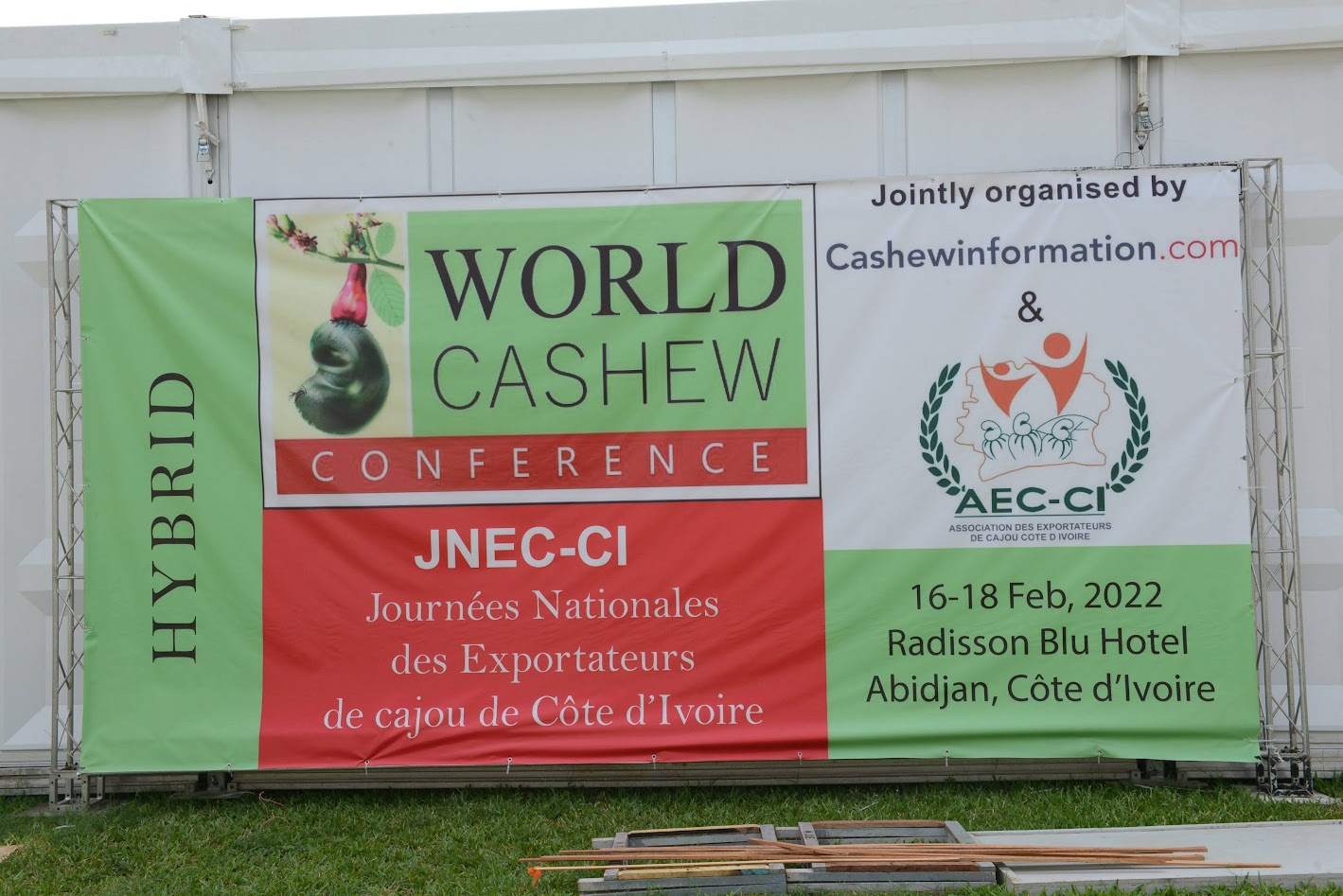
The world Cashew Conference was held from 16-18 February 2022 at the Radisson Blu Hotel in Abidjan (Côte d’Ivoire). It was an enriching session gathering the key actors of the cashew field. Cashew Coast was a sponsor of the event.
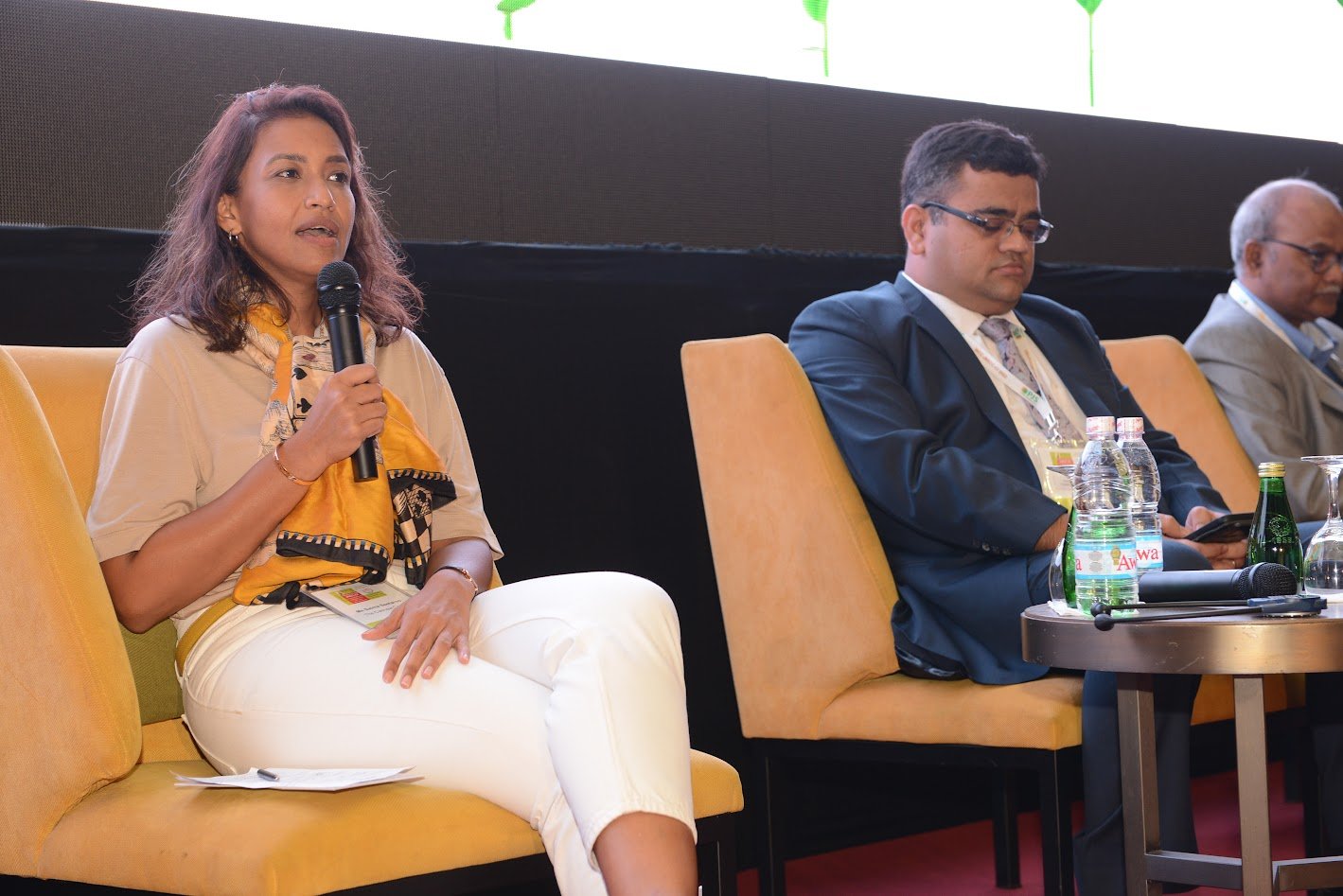
Salma Seetaroo, Cashew Coast’s CEO spoke about scaling up processing sustainably in Africa.
Day 1 — Wednesday, 16 February 2022
Cashew Women Leadership Programme
Cashew Women Training was conducted on Conflict Management. About 50 women from the cashew industry participated in the training.
Objectives of the training:
- Deepen understanding of conflict sources, dynamics, and approaches
- Develop awareness of factors influencing how individuals deal with conflict and confrontation
- Enhance skills and capacity to work effectively with conflict and challenges in teams and groups
- Promote appreciation and value of working with difference and diversity
The main focus of the training was on using the self in proactive conflict management to ensure efficiency and harmony in both professional and personal contexts, for individuals and groups.
A second training session addressed the sustainability of the cashew value chain.
Trainers:
- Mary Adzanyo (GIZ – MOVE/ComCashew)
- Adama Ango (Cashew Coast)
- Jessika N’dri (Cashew Coast)
Masterclass: Cashew Process Technologies for Africa
- Mr Joey Liao (MEYER)
- Mr Ethan Truong (CMV)
- Mr Sasisekar K (nanoPix ISS Pvt. Ltd.)
- Mr Jeevan Saldanha (Spectrum Industries)
Strengthening Competitiveness of the Cashew Industry in Africa: Update from Development Sector
Chair: Mr Shakti Pal (Caro-Nut)
Speakers:
- Mr Krishanu Chakravarty (Technoserve)
- Mr Jean Francois Guay (USDA–West Africa Pro-Cashew Project)
- Mr Laurent Gomis (LIFFT–Cashew Project, Senegal, The Gambia & Guinea-Bissau)
- Dr Peter Masawe BeninCaju)
The session highlighted multi-country efforts to strengthen Africa’s cashew industry, focusing on integration, value addition, capacity building, and innovation. Key projects across West Africa and the SeGaBi region aim to improve production, processing, market access, and sustainability, while supporting farmers, cooperatives, women, and youth. Achievements include increased kernel sales, job creation, expanded cultivated areas, and widespread organic certification. Challenges remain in finance, technology, processing capacity, and regulatory coordination, but opportunities exist through regional integration, market expansion, and supportive policies. Collaboration, innovation, and strategic policy support were emphasised as critical for the sector’s continued competitiveness and growth.
Inaugural Function
Chief Guest: H.E. Mr Patrick Achi, Prime Minister of Côte d’Ivoire
Guest of Honour:
- Hon. Mr Gabriel Mbairobe, Minister of Agriculture & Rural Development, Cameroon & Chairman, CICC
Invited Guests:
- Hon. M. Kobenan Kouassi Adjoumani, Minister of Agriculture & Rural Development, Côte d’Ivoire
- Hon. Souleymane Diarrassouba, Minister of Commerce & Industry, Côte d’Ivoire
- Hon. Amadou Koné, Minister of Transport, Côte d’Ivoire
- Mr Sailas Thangal, Ambassador of India to Côte d’Ivoire & Liberia
- Mr Diaby Aboubacar, AEC-CI
- Mr Suraj Rao, ETG
- Mr G. Srivatsava, Eventell Global Pvt Ltd
Day 2 — Thursday, 17 February 2022
Opening Address
Dr Adama Coulibaly (Cotton & Cashewnut Council, Côte d’Ivoire)
The speech welcomed participants to the 2022 World Cashew Convention and National Days of Cashew Exporters in Côte d’Ivoire, emphasising the country’s pivotal role in the global cashew industry. It highlighted the government’s commitment to local processing, stable jobs, and fair incomes for producers while ensuring a reliable supply to international markets. The address acknowledged the efforts of organizers, sponsors, and participants in making the event possible despite COVID-19. It also called on industry stakeholders to safeguard small producers’ interests and stressed ongoing challenges, including quality standards, certification, logistics, and competition, while recognising the sector’s growing potential and opportunities.
Special Address
- Mr Babatola Faseru (African Cashew Alliance)
Babatola Faseru, President of the African Cashew Alliance, welcomed participants to the World Cashew Convention and National Cashew Exporters Day in Abidjan, praising Côte d’Ivoire’s production growth and Africa’s contribution of over 50% to global cashew output. He highlighted the continent’s low processing rate and emphasized the need for regional and international partnerships to boost industrial growth and competitiveness. ACA’s initiatives, including food safety certification and support for local processors, aim to strengthen market readiness and quality standards. Faseru also stressed organizing stakeholders through national associations to foster collaboration and policy support. Finally, he invited participants to the ACA Annual Cashew Conference in Abuja in September 2022, promoting it as a platform for networking, partnerships, and sustainable sector development.
- Mr Ganesh Rajaraman (Olam Food Ingredient)
Ganesh Rajaraman highlighted that the global cashew industry is shaped by three core drivers: crop supply, processing, and demand. Crop growth is strongly influenced by policy and pricing, with Côte d’Ivoire and West Africa showing significant increases over the past decade. Processing expansion depends on supportive policies, government action, labor costs, and a robust ecosystem, with notable growth in Africa and Asia. Demand is driven by health trends and innovative cashew-based products, though the industry needs stronger efforts in product development and marketing. Emerging issues include climate change impacts and regional production shifts. Overall, sustainable industry growth requires flexible policies, ecosystem support, innovation, and fair pricing to ensure benefits are shared across the supply chain.
Discussion 1: 2022 Country-wise Raw Cashew Nuts (RCN) Crop Status and Outlook
Chair: Mr Mamadou Doumbia (Conseil du Coton et de l'Anacarde, Côte d’Ivoire)
Speakers:
- Mr Peniel Fanou (CoNEC, Benin)
- Mr Sanfo Ibrahim (CAIB, Burkina Faso)
- Mr Bach Khanh Nhut (Vinacas Inspection Board)
- Mr Dadasaheb Desai (DCCD, Government of India)
- Mr Olasunkanmi Owoyemi (Sunbeth Global Concepts)
- Mr Suraj Rao (ETG)
Benin (Peniel Fanou)
In 2021, Benin produced approximately 189,000 tons of raw cashew nuts, with nearly all exported and a small but growing portion processed locally. The sector benefited from favorable rainfall, low pest pressure, and expanding plantation areas. For 2022, production was forecast to grow by about 10% to 208,000 tons, with a significant increase in local processing capacity and improved nut quality expected. Challenges include export controls, infrastructure upgrades, and quality certification systems, while strategic partnerships and sector reforms aim to further professionalize and strengthen the industry.
Nigeria (Olasunkanmi Owoyemi)
Nigeria has around 600,000 cashew trees and produces about 120,000–192,000 tons of cashew annually, with 85% exported due to limited local processing. The 2022 crop was expected to rise by 20% thanks to favorable weather, with government export expansion programs providing additional momentum. However, the sector faces challenges such as lack of processing knowledge, price fluctuations, poor research on improved varieties, and high freight costs. Partnerships and technology transfer with global players are seen as key to unlocking Nigeria’s processing potential.
Burkina Faso (Sanfo Ibrahim)
Burkina Faso’s cashew sector is organized through strong producer, processor, and exporter associations, with government and donor support. Production increased from 120,000 tons in 2020 to 145,000 tons in 2021, with yields of 400–500 kg/ha and nut quality (KOR) between 45–47. About 10% of production is processed locally, with the rest exported mainly to India, China, and Vietnam. For 2022, production was forecast at 160,000 tons, with ongoing improvements in planting material, processing capacity, and marketing systems. The government has introduced export levies and is encouraging prompt sales and quality improvements.
Côte d’Ivoire (Mamadou Doumbia)
Côte d’Ivoire remains the world’s largest RCN producer, with nearly one million tons produced in 2021—a 94% increase since 2014. Exports reached over 800,000 tons, mainly to Asia, and local processing has grown to 14% of production, supported by government incentives and new agro-industrial zones. The sector benefits from favorable weather, improved varieties, and robust training programs. For 2022, further increases in production and processing are expected, with continued government support for quality, research, and investment in processing infrastructure.
Mozambique (Suraj Rao)
Mozambique produced 140,000 tons of RCN in 2021–22, exporting 110,000 tons and processing 35,000 tons locally. Exports are mainly destined for India (82,000 tons) and Vietnam (27,000 tons). The country has maintained stable production over recent years, with a quarter of exports going to Vietnam and three-quarters to India. Local processing accounts for about 25% of production, and the sector is focused on maintaining export volumes and improving processing rates.
Tanzania (Suraj Rao)
Tanzania produced 235,000 tons of RCN in 2021–22, with 220,000 tons exported and 15,000 tons processed locally. Exports are evenly split between India and Vietnam. The country has seen steady growth in production over the past three years, with local processing representing about 6% of output. The sector is characterized by a strong export orientation, and efforts are ongoing to increase local processing and value addition.
India (Dadasaheb Desai)
India cultivates cashew in 19 states, producing about 738,000 tons of RCN from 1.16 million hectares, with productivity of 684 kg/ha (2020–21). The country exports over 70,000 tons of kernels annually and supports 1.5 million people in the sector. For 2022, production was estimated at 774,000 tons, with Maharashtra, Andhra Pradesh, and Odisha as leading producers. The government is promoting high-density planting, replanting with improved varieties, and technology transfer to boost productivity and sustainability. Future strategies focus on expanding area under high-yielding varieties and organic practices.
Vietnam (Bach Khanh Nhut)
Vietnam is the world’s largest importer and processor of African RCN, sourcing nearly 2 million tons in 2021 (63% of its imports). The quality of African RCN has improved, with better moisture control and fewer quality issues, especially from major exporters like Côte d’Ivoire. Cambodia is also a major supplier, providing high-quality nuts due to favorable harvest and logistics. Some quality challenges remain with small African shipments, and logistics disruptions due to COVID-19 have affected trade. Vietnam encourages African exporters to maintain high standards and timely deliveries to support its processing industry
Discussion 2: Cashew Processing in Africa – How to Scale Up Sustainably?
Chair: Ms Rita Weidinger, ComCashew, GIZ
Speakers:
- Ms Salma Seetaroo (Cashew Coast, Côte d’Ivoire)
- Mr Mayank Srivastava (Olam OFI)
- Mr Abhishek Mishra (Valency, Nigeria)
- Mr P. C. Das (Technoserve)
- Mr Jace Rabe (Tolaro Global)
Scaling up cashew processing in Africa requires breaking the cycle of unprofitable processing caused by low utilization, poor access to raw nuts, and limited investment, which in turn restricts operational performance and financing. Sustainable growth depends on improving efficiency, productivity, and capacity utilization, supported by skill development, innovation, and strong local engineering and marketing ecosystems. The sector has seen recent increases in processing volumes, especially in West Africa, driven by government incentives, growing investor interest, and the emergence of committed partners and technical support programs. However, African processors still face higher costs, financing challenges, and a lack of ancillary industries compared to Asian competitors, as well as the need for better quality incentives and local demand stimulation. The path forward involves starting with small, well-managed operations, leveraging expert support, and building a sustainable supply chain through digitalization, waste management, and ecosystem development, with the ultimate goal of positioning Africa as a competitive, risk-diversified supplier to global markets.
Presentation: transporting cashews around
the world
- Mme Carine Kouakou (MSC Côte d’Ivoire)
Discussion 3: Dealing with Shipping/Logistics Challenges
Chair: Dr Adeyemi Murtada Adeniji (Starlink Global Ideal)
Speakers:
- Mr Jean Christophe Schmidt (Maersk Côte d’Ivoire)
- Mr Piyush Rathore (Atlas Global Company Ltd)
- Mr Konate Issa (AEC-CI)
Presentation: Global Food Safety Culture & Trends – New U.S. FSMA Requirements and Côte d’Ivoire’s Response
Chair: Mr Karim Berthe, Cotton & Cashewnut Council, Côte d’Ivoire
Speakers:
- Mr Losseni Kone (Ivorycashew)
- Mr Bob Bauer (AFIUS)
- Ms Nancy Scharlach (FSMA International)
- Dr Kelley Page Jibrell (Ivorycashew)
- Mr Martin Gedig (Golf-game)
Presentations on Sustainability Initiatives in the Cashew Sector
- Mr Jasveer Singh (Arise Integrated Industrial Platforms)
- Mr Andre van den Beld (ETG)
This presentation highlights the evolving landscape of sustainable commodity markets, noting that cashew lags behind crops like cocoa and coffee but holds significant potential, especially in regions facing desertification and poverty. ETG’s sustainability strategy focuses on carbon reduction (including biochar pilots and voluntary carbon markets), local processing, reforestation, and community empowerment. Key achievements include supporting over 100,000 farmers across 13 African countries, planting more than 6.5 million cashew seedlings, creating over 3,000 jobs for women, and establishing 100+ savings groups. ETG’s 2030 ambitions are to achieve 100% child labor monitoring, zero deforestation, and carbon-neutral supply chains. Upcoming projects in Côte d’Ivoire’s Marahoué-Sassandra region aim to support 20,000+ farmer households with climate-smart practices, reforestation, agroforestry, and a multi-commodity approach, inviting new partners to join these sustainability efforts.
Discussion 4: Financing the Cashew Value Chain – Learnings and the Way Forward
Chair: Ms Raissa Diomande (ComCashew)
Speakers:
- Mr Chu Lin (S G Agro)
- Mr Diaby Lucman (GIC-CI)
- Mr Simplice Chigbo (Oikocredit)
- Ms Solène Prince-Agbodjan (Injaro Investments Ltd)
Day 3 — Friday, 18 February 2022
Special Session by CICC
Chair: Hon. Mr Gabriel Mbairobe (Minister of Agriculture & Rural Development, Cameroon & Chairman, CICC)
Country Representatives:
- Dr Adama Coulibaly (Conseil du Coton et de l’Anacarde, Côte d’Ivoire)
- Mr Joseph Zerbo (Conseil Burkinabè de l’Anacarde, Burkina Faso)
- Hon. Mr William Quaittoo (Tree Crop Development Authority, Ghana)
- Ms Lúcia Sebastião António (Institute of Nut of Mozambique, Mozambique)
- Mr Issaka Kassimou (Agricultural Development Agency, Ministry of Agriculture, Benin)
- Mr André Tandjiekpon (Executive Secretary, CICC)
The CICC (Conseil International Consultatif du Cajou / International Cashew Consultative Council) is an intergovernmental organization established in 2016, comprising 11 member states: Benin, Burkina Faso, Cameroon, Côte d’Ivoire, Ghana, Guinea, Guinea-Bissau, Mali, Nigeria, Senegal, and Togo. Its mission is to foster cooperation, consultation, and harmonization of policies among cashew-producing countries in Africa.
CICC operates through five pillars:
- construction and outreach,
- cooperation and consultation,
- policies and governance,
- access to data and information, and
- capacity development.
It is governed by a Council of Ministers, an Executive Secretariat, and three technical commissions (scientific, agricultural, and industry/processing). The CICC aims to address challenges such as fragmented national policies, lack of coordination, and the need for shared best practices and harmonized regulations in the cashew sector.
The Special Session on CICC showcased the Council’s pivotal role in uniting African cashew-producing countries to harmonize policies, share best practices, and drive sectoral reforms. Presentations from Burkina Faso, Ghana, Mozambique, and Benin highlighted national strategies aligned with CICC’s vision: boosting local processing, improving yields, supporting value chain actors, and investing in infrastructure and capacity building. Common themes included the need for coordinated policy frameworks, incentives for production and processing, digitalization for traceability, and public-private partnerships. The session underscored the importance of structural reforms, regulatory bodies, and regional cooperation to enhance competitiveness, value addition, and sustainable growth in the African cashew sector.
Discussion 5: Cashew Kernel Markets Review and Outlook
Chair: Mr James Fitzpatrick (Ingredient Sourcing Solutions)
Speakers:
- Mr Tejhash Modh (ETG)
- Mr Chen Wen (Symbolfood Company Ltd)
- Mr Robert Saccoccio (Scalzo Foods)
- Mr Richard Rosenblatt (The RFA)
- Mr Kalbavi Prakash Rao (Kalbavi)
The panel on "Cashew Kernel Markets Review and Outlook" revealed a dynamic global landscape marked by strong and evolving demand across key regions. Australia and New Zealand remain major per capita consumers, though logistics and competition from almonds shape the market. India, the world’s largest consumer, is rebounding from pandemic disruptions with renewed growth in retail and ingredient segments, while facing ongoing supply chain and inflationary pressures. The Middle East, led by the UAE as a trading hub, is expanding its market with increasing imports from Vietnam and a growing emphasis on food safety and packaging innovation. In China, imports are rising despite global challenges, with Vietnam as the dominant supplier and a trend toward diversified kernel grades and innovative uses. Across all regions, supply chain disruptions, shifting consumer preferences, and the need for quality and certification are central themes, but the overall outlook is optimistic, with expectations of continued growth and market diversification.
See all presentations here: https://www.cashewconference.com/WCC2022/programme.html