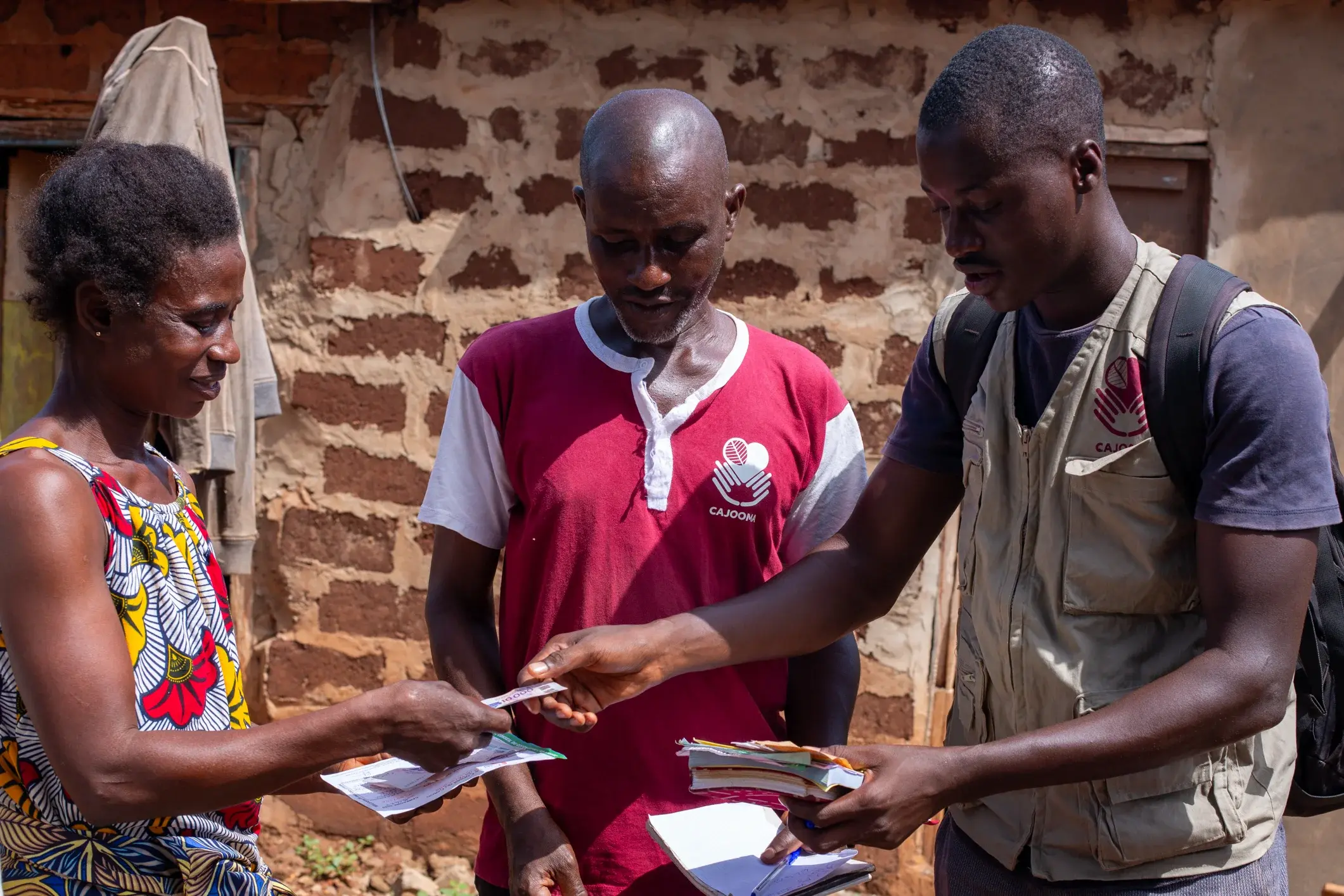

Our CEO just got back from Planhankro and Namouekoumgba, two of our farmer communities in Central Cote d’Ivoire.
Until now, they had shockingly poor access to water, but we have changed that, with the help of the African Cashew Alliance.
Water wells and latrines are now being built as I write this post.
And per tradition at The Cashew Coast, we celebrated, and made a video to share with you.
Farmer integration is one of the pillars of Cashew Coast’s business model and long-term competitiveness.
Farmer integration sits at the heart of Cashew Coast’s model, underpinning the company’s ability to deliver high-quality, fully traceable cashews while building a resilient and sustainable value chain in Côte d’Ivoire.
1. Ensuring True Traceability and Credible Certifications
Cashew Coast wants its certifications (BRCGS, SMETA, Organic, Fairtrade, etc.) to cover the entire supply chain.
That can only be achieved if farmers are not treated as anonymous suppliers but as partners embedded in a traceable system.
Farmer integration enables:
- Full visibility from farm to fork through SAP Rural Management System.
- Verification of organic practices, agrochemical use, and harvest practices.
- Confidence for buyers that “Ivory Coast origin” is not a commodity claim but a fully documented supply chain.
For a company competing on quality and sustainability—not on commodity price—this level of integration is essential.
2. Securing Quality, Freshness, and Volume
Cashew Coast’s value proposition relies on:
- Locally sourced and quickly processed cashews
- Higher kernel quality
- Lower defect rates
- Superior sensory characteristics linked to freshness
None of these are possible without tight integration with farmers.
Integration allows:
- Training on best harvest and post-harvest practices
- Direct sourcing (reducing delays and degradation)
- Predictable volumes for processing plants
- Collaborative experimentation (e.g., bee-keeping to improve yields)
In an industry where most processors buy from intermediaries and therefore lose control of quality, Cashew Coast’s model depends heavily on being close to the farm.
3. Building Climate and Economic Resilience in the Value Chain
Cashew Coast positions itself as an active stakeholder in the cashew ecosystem—not just a buyer.
This is a strategic advantage.
Farmer integration supports:
- Climate resilience (better agronomy, improved soil fertility, pollination projects, diversification)
- Reduced dependency on the volatile nut market thanks to added income streams (pepper, honey, etc.)
- Long-term loyalty and stability within supplier communities
- More equitable value distribution
This strengthens the entire chain and protects Cashew Coast against supply shocks, rising competition, and climate impacts.
4. Driving Sustainability and Local Development
Because Cashew Coast’s mission is to build a sustainable African cashew industry—not just run a factory—farmer integration is a core part of its identity.
It enables:
- Empowerment of rural communities
- Education and capacity-building
- Fairer economic outcomes
- Local product development (e.g., La Maison du Cajou’s snack line using locally grown spices)
It also reinforces Cashew Coast’s position as a development actor, not only a commercial entity.
In a nutshell
Farmer integration is not a CSR project for Cashew Coast—it is the foundation of the company’s operational, economic, and strategic strength.
It allows the business to offer fresher, higher-quality, traceable cashews while building a resilient and equitable value chain in Côte d’Ivoire.