
In November 2025, Cashew Coast CEO, Salma Seetaroo, took part in #AGORA25 — the “Africa Growth and Opportunity: Research in Action” conference, organised by the World Bank Group’s Institute For Economic Development in Palermo.
Salma shared how Cashew Coast is creating sustainable employment in Côte d’Ivoire by transforming local agriculture and processing. She highlighted how value-added exports of Ivorian cashews to Europe can drive inclusive growth while promoting responsible and resilient development across the value chain.
Creating Jobs in West Africa
I used to be a mining finance banker. I'm originally born and bred in Mauritius and I spent my career doing mining deals across Africa. And then in 2018, I got a little bit fed up with seeing all the raw materials going away to other parts of the world because of the lack of energy.
When I discovered the cashew industry in 2018-2019, Côte d'Ivoire was the largest grower of these nuts. But yet ivorian cashews would be transported to Vietnam for processing (and they don't take much to process in terms of energy, by the way), they'd be processed there and then the kernels would come back again to Europe for consumption.
It didn't really make sense.
I thought, we have to create jobs where they belong, and these jobs belong to West Africa.
That's why I set out to do what I do today and I'll tell you more about it.
On the other hand, I saw the opportunity in Europe because the vegan trends were not fads. People were going to move to plant-based protein and I could see that cashew could be that staple of that vegan diet.
So all this put together, I set out to develop Cashew Coast.
Cashew Coast in a Nutshell
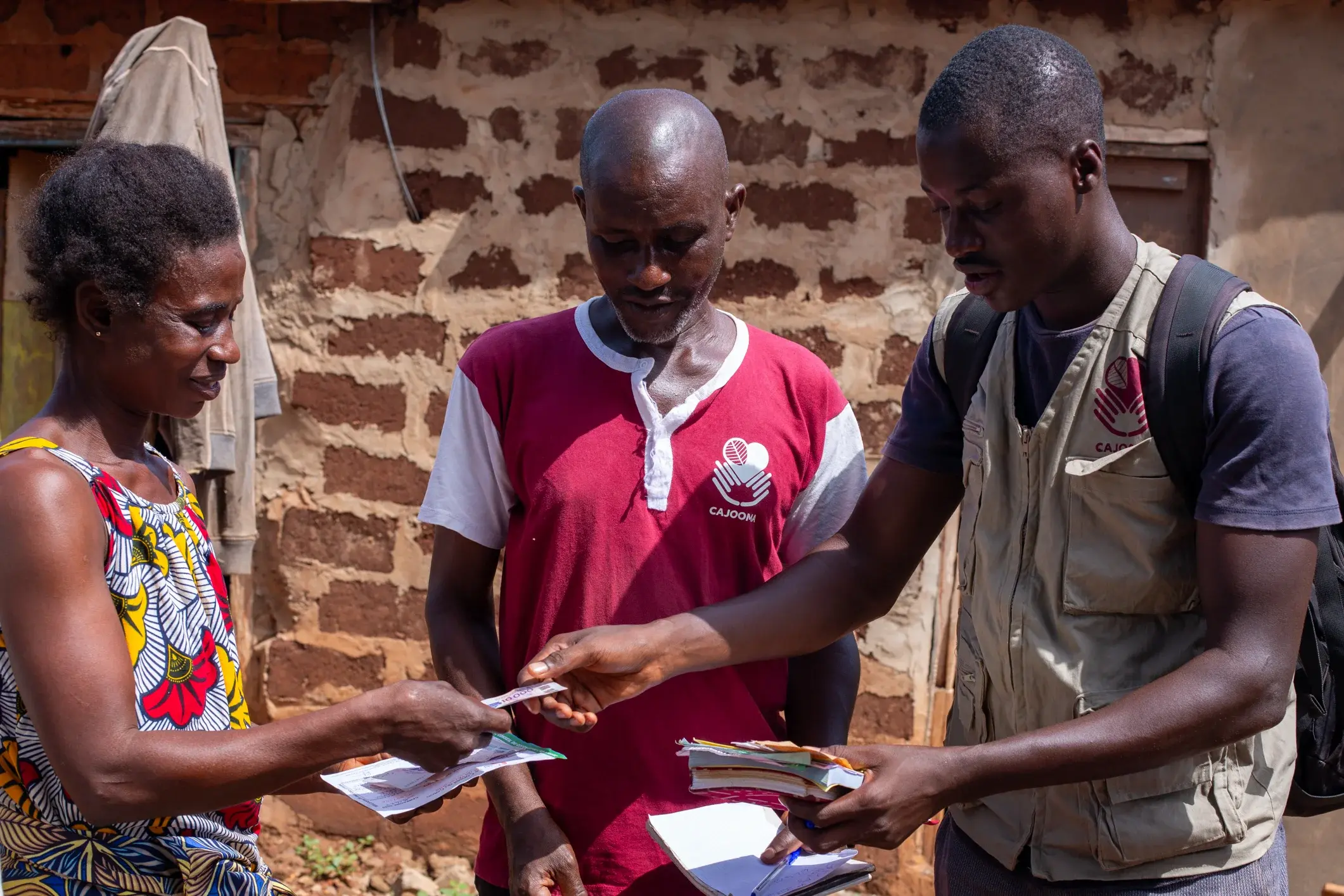
We are an integrated cashew processor. On the face of it, we have integrated 12,000 farmers into a digitally enabled supply chain. We employ 700 people, mainly women, in permanent jobs in Côte d'Ivoire, and we export 200 containers of cashews to Italy, France, and Germany. We have mapped 20,000 hectares of land in Côte d'Ivoire.
You must be thinking, are they making money?
Because that's what it's all about. It's about making money for this to work. After having lost a fair bit of money, we broke even in 2022 and I'm very happy to say that we are profitable. We have an EBITDA margin of 12%. Last year I raised money from a debt front in the UK to double capacity, and I'm raising more money this year and next year to double capacity again.
Our turnover today is €23 million and we're going to reach €50 million by 2027.
Pesto, COVID and Certifications: The Path to Success
I've often asked myself this because I'm no genius, I'm not from the sector. I came in as a complete outsider and looked at it with different eyes.
One of the reasons we succeeded is because of pesto.
That's why it's so exciting for me to be here in Palermo on this bridge between our two continents. Pesto—why? Because traditionally Europe consumed cashews as a snack, and I could foresee that we would be consuming cashews as an ingredient as the vegan trends picked up. But the Italians were eating pesto way before the vegans, and some Italian pesto makers decided to add cashews to their recipe.
Italy became our first partners because as African processors we started processing these cashews, but we broke them because we didn't know how to operate the machines properly. Whilst Vietnam was doing 15% broken, we were doing 40% broken. And if you break it, you sell it at 50% of its value. So that's why African processors couldn't get off. But the Italian pesto makers decided to buy our broken cashews, which came at a discount but valued it.
The second reason was the Ivorian government policy. Ivory Coast really set out to develop its processing industry—tax exemptions, incentives to drive foreign investment into the country to develop processing.
The third one is COVID. Yes, COVID. Interestingly, COVID helped us. You all ate more cashews than crisps during COVID, but Vietnam's shipping route was completely disrupted. It took them six months to send cashews to Europe, and it took us from Ivory Coast three weeks. So we were completely undisrupted during COVID.
We are the most certified company in the cashew space today.
But we did other things as well as a business to adapt to what the European Union wanted as a product—that was about certification. We are the most certified company in the cashew space today. We were the first to be BRC certified, which is a food safety standard, and we built traceability through technology.
Lastly, we recruited locally. We grew competence from the bottom up by recruiting engineers, agronomists, managers from Côte d'Ivoire.
Building Resilience with Circular Economy
The future for us is about building resilience, investing continuously in technology to be able to crop forecast, adapt production planning using artificial intelligence.
The second exciting thing is about the circular economy we're diversifying into.
We've signed a partnership with another Italian company recently to crush these shells because from these shells — which represent around 80 percent of the nut and are currently treated as waste — we can extract cashew nut shell liquid (CNSL). CNSL can then be refined into cardanol, a high-value bio-based chemical that serves as an important intermediate in the production of sustainable aviation fuel. So for us, that's the future. We're installing a 100,000-ton shell crushing unit in Côte d'Ivoire at the moment in addition to our kernel business.
For us, the future is about a happy farmer, and a happy farmer ensures a traceable product because the farmer then doesn't side-sell.
How do you ensure that a smallholder is happy?
That person gets money. But because it's a single commodity, it is impossible to keep increasing the price to satisfy the farmer. So we as a company have decided for the next five years we will be diversifying our supply chain.
On that same cashew plantation, what else can grow that we can then buy from our farmer—not just buying and giving access to market, but buying, processing, and adding value? These for us have been chili, ginger, and honey that we are associating with the cashew and seasoning it in Côte d'Ivoire for export to Europe.
Watch the complete presentations:
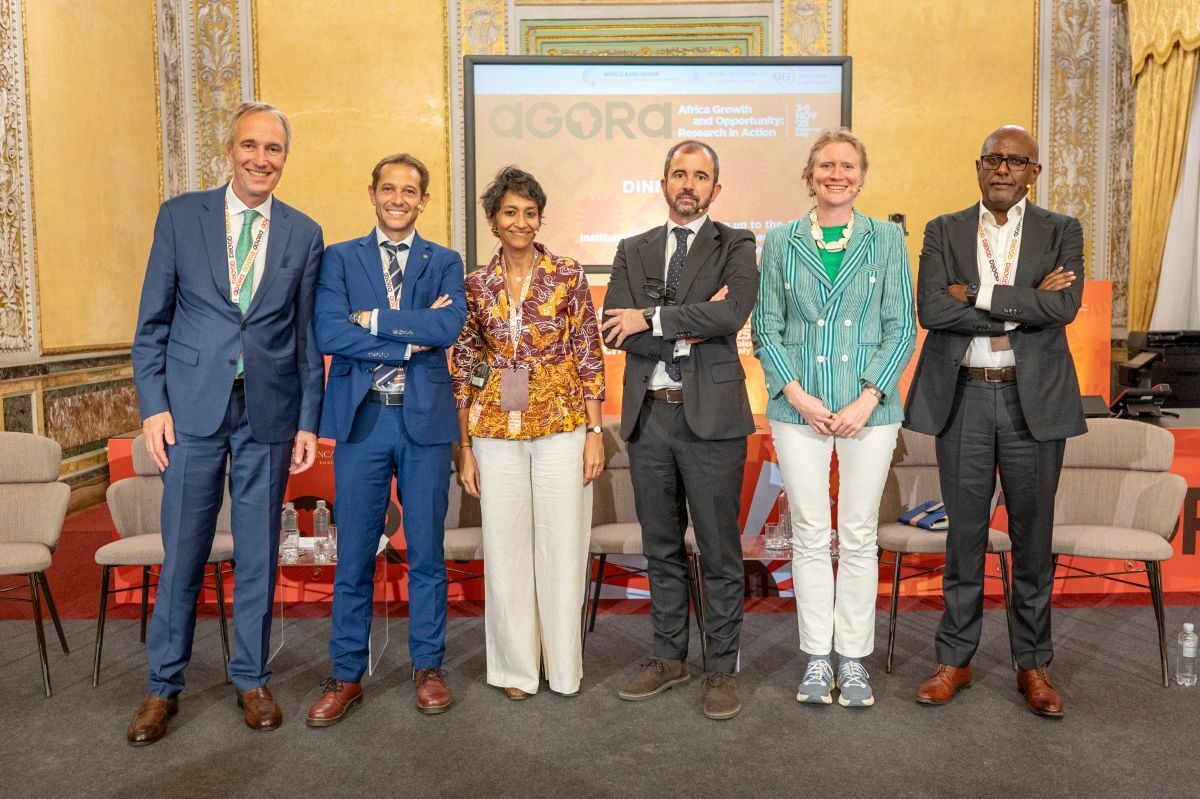
From 3–5 November, the World Bank Group Institute for Economic Development, the Bank of Italy, the Italian Ministry of Economy and Finance, and African partner institutions are hosting the Africa Growth and Opportunity: Research in Action (AGORA) conference in Palermo, Italy. Convened at the historic Palazzo dei Normanni, the event brings together experts and leaders from Africa, Italy, and Europe to align research, investment, and policy with a single objective: expanding employment and economic opportunity for Africa’s next generation.
The conference’s AGORA programme features a series of TED-style presentations delivered by entrepreneurs from across Africa and Europe who are advancing innovation and social impact in agriculture, finance, manufacturing, and technology.
Each speaker highlights their journey, the obstacles they have confronted, and the solutions they are developing to support smallholder farmers, micro and small enterprises, and local communities.
Link: https://www.wbginstitute.org/news/innovation-and-technology-power-africa