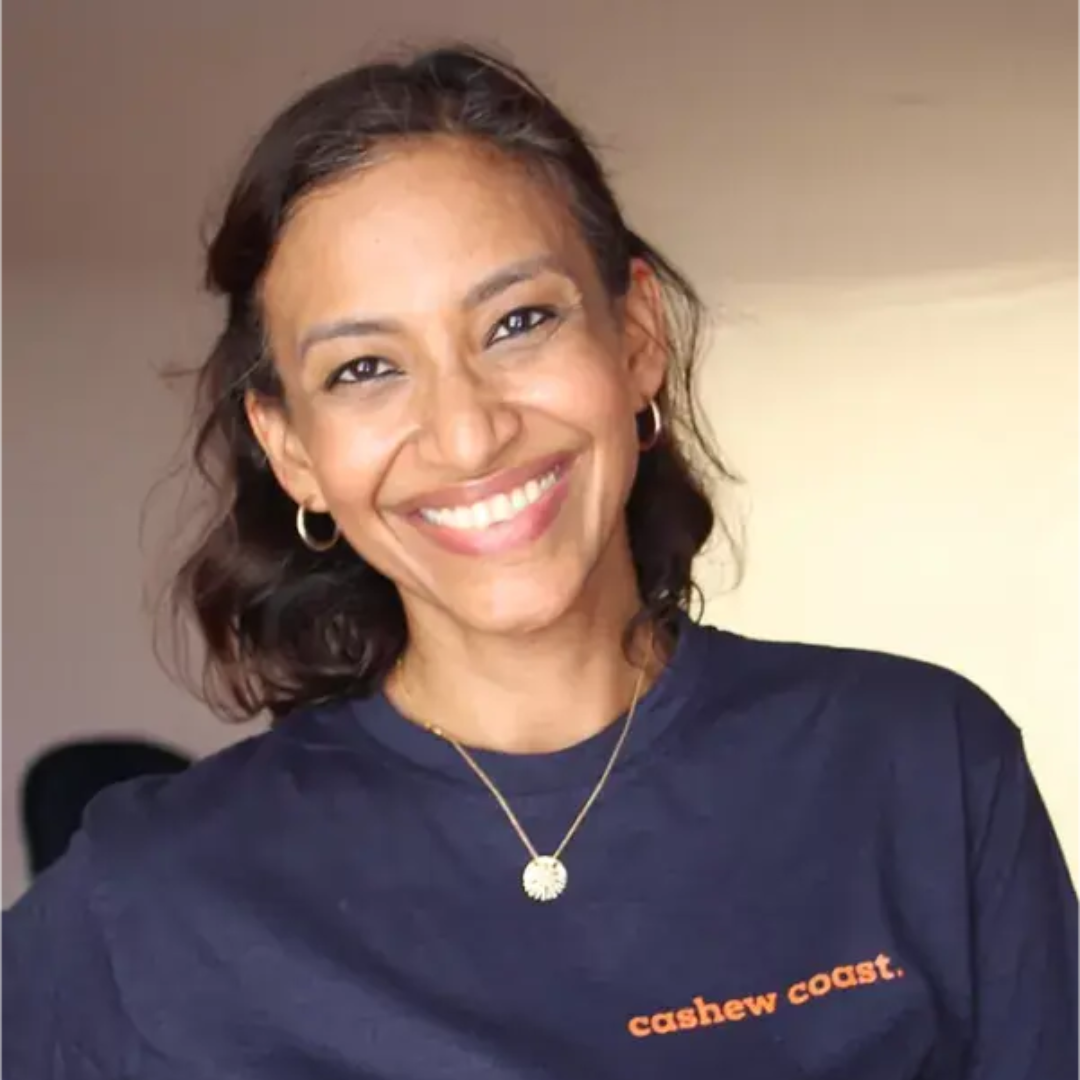

At the 2025 European Bank for Reconstruction and Development (EBRD) panel, “Africa’s Digital Take-Off — fast-tracking digital transformation and AI”, Cashew Coast CEO Salma Seetaroo joined leading industry voices to discuss the role of digital transformation in African agriculture.
Alongside experts from AI Caramba!, Kera Health, Mastercard, and the EBRD, and moderated by BBC presenter Nancy Kacungira, Salma shared insights on how Cashew Coast is harnessing technology to create a more transparent, inclusive, and sustainable agricultural sector. From implementing digital traceability systems to integrating AI for predictive insights, and fostering deeper connections with farmers, Cashew Coast is pioneering a new approach to building Africa’s agri-future.
In the following sections, we explore three key themes from Salma’s discussion: bridging digital innovation and rural reality, understanding and strengthening farmer loyalty, and leveraging AI to shape Africa’s agricultural future.
Leveraging Data and AI in the Realities of African Rural Supply Chains
Good morning, everyone. I’ll try to explain how we navigate between digital innovation and the rural complexities of our daily work — and also how AI can offer us a competitive advantage as an African team.
Let me start with traceability. Traceability means knowing every step in your supply chain. When you can see everything, you can hold actors accountable and collect the data you need to make informed decisions. And when disruptions occur — and they occur all the time — you can respond based on evidence rather than guesswork. Traceability is at the core of how we operate and how we integrate the supply chain in the cashew sector.
A real example: last year, we raised money from a private equity investor in London. During due diligence, they asked how exposed we were to deforestation. Thanks to the data we had gathered and analysed through our SAP Rural Sourcing Management system, we were able — in half an afternoon — to demonstrate that only 2% of our supply chain was exposed to deforestation.
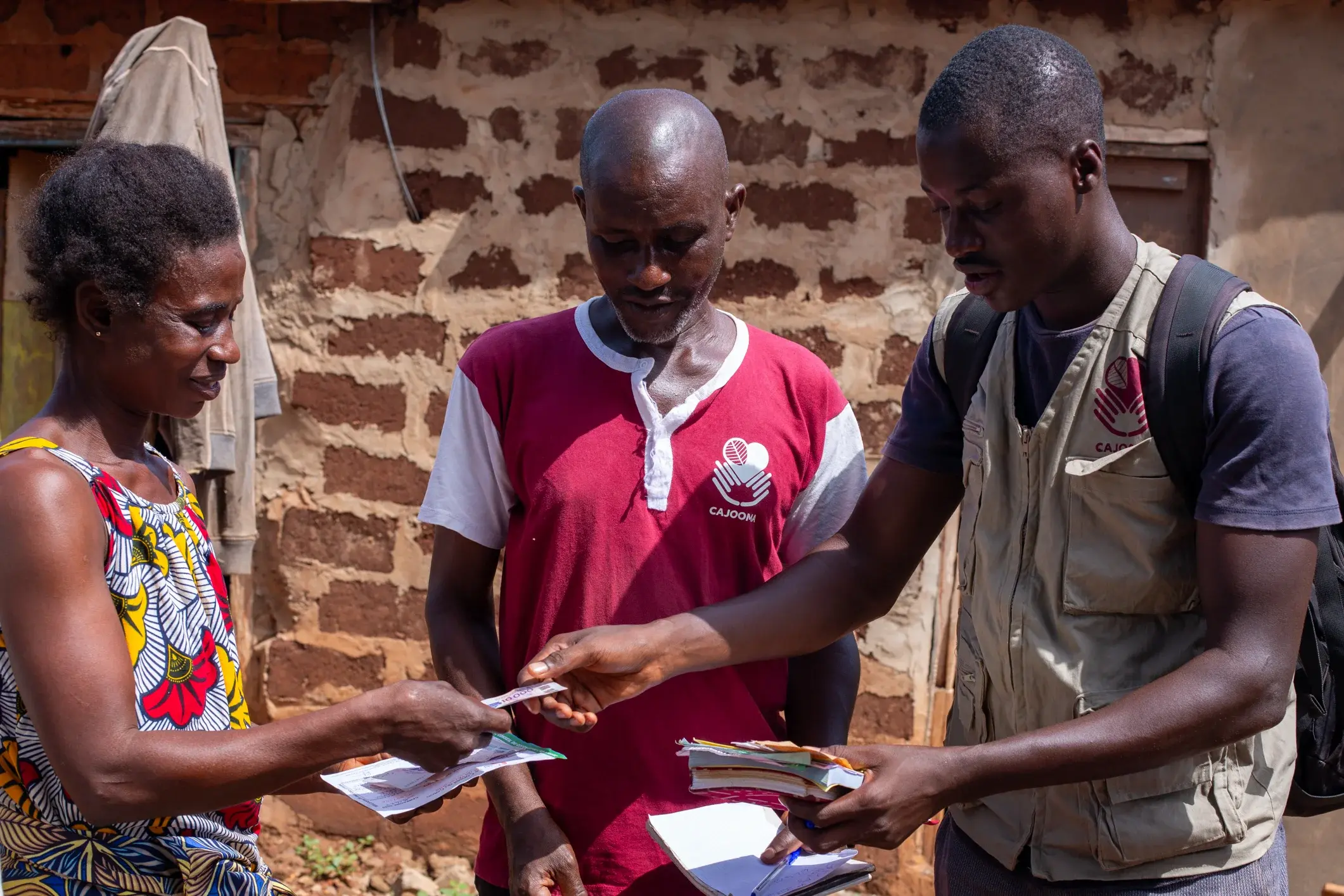
We often talk about farm-to-fork traceability, but fork-to-farm traceability is just as important, meaning the flow of money. As Moustapha [Cisse] mentioned, this includes digital payments. Let me share a real example. Most of the cashew traded in Côte d’Ivoire, and across Africa, is still purchased in cash. I’ve just come out of the harvest season, during which I disbursed €12 million in cash in the bush. It’s an absolute nightmare.
My challenge, starting this business five years ago, has been to convince farmers to accept digital money. We all see images from East Africa — farmers paying for groceries with M-Pesa — and we get excited. But my reality is very different. Our Ivorian farmers are extremely reluctant to accept digital payments. They simply can’t believe that a tiny old Nokia phone can hold the money from their only cash crop of the year.
We tackled this in two ways: adoption and connectivity. And remember, we are a small company — and in the long run, we are all dead — so we focus on solving what matters now.
First, on adoption: we run a school loan programme for our farmers to help them pay for schooling around September. We decided that from that point on, all school loans would be disbursed digitally. Because they were asking for the money, it was easier to convince them to accept digital disbursement. Once they started receiving school loans digitally, they began to experience it and trust it.
Second, connectivity: my team now knows exactly under which mango tree there is Orange or MTN reception in each of the 215 villages we work with.
Ultimately, bridging the gap between digital innovation and rural complexity requires obsession. You cannot give up at the first hurdle. It takes grit — and a relentless focus on making it work.
How Data Helps Us Measure and Improve Farmer Commitment
I want to talk about farmer loyalty, because that’s what keeps me awake at night. We make significant investments in our supply chain, and there is really one key indicator that summarises all our efforts: will the farmer sell his or her product to us at the end of the day? If we don’t manage that — and since we buy traceably — then we’ve essentially failed. We measure this through volumes delivered versus volumes forecast.
Farmers will never tell you they’ve sold elsewhere; they will always blame the weather. And of course, many factors can affect a farmer’s ability to deliver the expected volume: climate, price, liquidity, and how well the plantation has been managed, to name just a few.
With the curated and structured data we’ve built internally through our digital systems, we are now able to identify trends in farmer behaviour. That’s genuinely exciting. For example, if we install a water pump in one of the 215 villages we work with, can we measure whether that improves female loyalty? Does it improve the quality of the cashew we buy? With the systems we currently have, we can actually answer these questions — and that’s a major step forward.
I also want to come back to something Moustapha [Cisse] mentioned: radio. When it comes to communicating with our farmers, we are still quite old-fashioned. We believe face-to-face communication is the best — and often the only — option because of the connectivity issues we face. We have a team of 60 field agents who follow farmers throughout the season. It may be traditional, but it works.
Recently, we’ve started using SMS. That’s exciting because most farmers have basic phones — we’re talking simple GSM devices — and we’re working with an ageing population. And that’s an important point: agriculture isn’t attractive to young people. Many prefer gold panning to working on the farm. Farming is, unfortunately, a last resort in our supply chain today.
Africa’s Agri-Future Is Already Here
I want to talk about what we’re doing right now, because we’re starting to leverage AI as a business advantage — which is very exciting. We’re combining satellite, weather, and on-farm data to develop predictive models.
I’ve had to recruit new people for my team: we’ve brought in two African data scientists, a tech manager, and we’re strengthening our team of field agents because on-farm data has become even more important. We’re also investing in drones to capture this data, and to use them effectively we need to train even more people.
For us, the reality is that Africa’s agricultural future is happening today. We have to build it to be fair, smart, and transparent — and the job creation is happening now.
References
Watch the full video on the EBRD website: Africa digital take-off
Speakers:
-
Nancy Kacungira, Presenter / Correspondent, BBC
-
Matthew Blakemore, CEO, AI Caramba!
-
Moustapha Cisse, CEO, Kera Health
-
Folasade Femi-Lawal, Country Manager, West Africa, Mastercard
-
Melis Ekmen Tabojer, MD, PSD, EBRD
-
Salma Seetaroo, CEO, Cashew Coast